
Best Camp Stoves for Delicate Cooking: Heat Control Test
By Amina Al-Khalil • 10th May
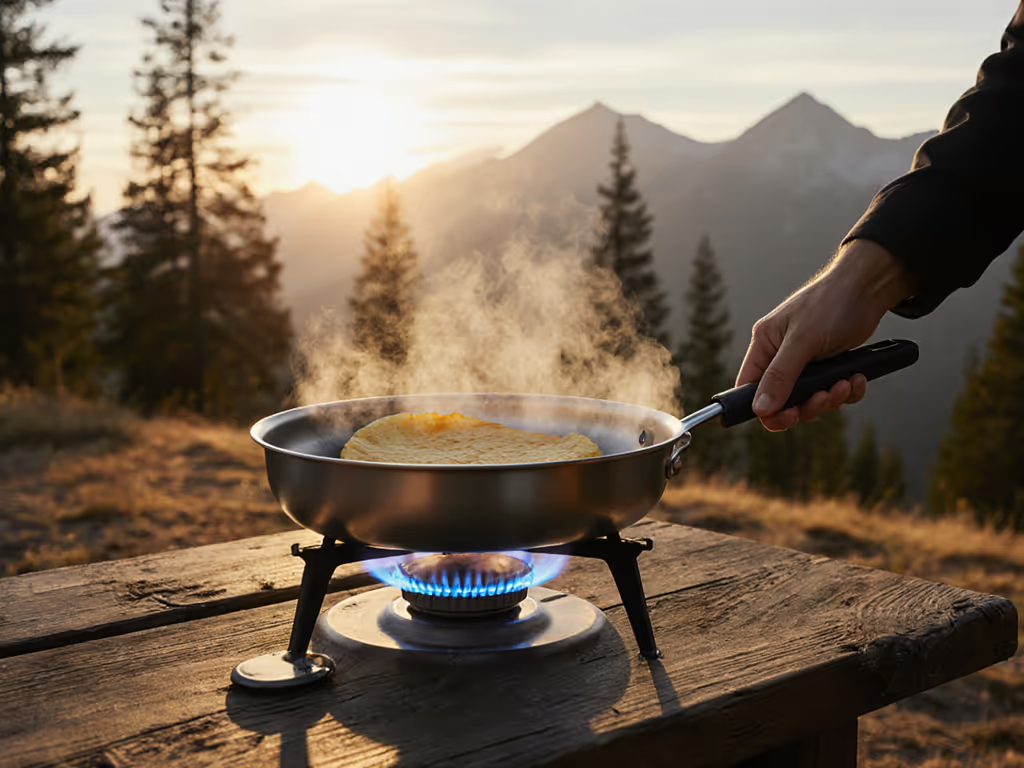
When you're cooking eggs in a high-altitude camp or crafting pancakes for a group of six in the backcountry, you need more than just a delicate-cooking stove (you need precision, reliability, and the ability to adjust flame instantly). A good camp stove for nuanced cooking is one that delivers consistent simmer control, responds quickly to heat adjustments, and stays serviceable in the field. Too many outdoor cooks settle for stoves that boil water quickly but burn their meals the moment they try to simmer, or worse, fail when they're needed most.
This article compares real-world performance data from delicate-cooking scenarios (egg cooking capability, pancake preparation success, temperature-sensitive cooking, and simmer control precision) to help you choose a stove that actually performs when butter matters.
The Case for Simmer Control
Most camping stove reviews fixate on boil time: how fast can you heat 1 liter of water? That's useful for a cup of coffee, but it's not the full story. A quiet flame is a healthy flame, and a healthy flame is one that simmers eggs gently, melts cheese without scorching, and lets you cook something beyond rehydrated meals.
Simmer control is the ability to maintain a low, stable heat output over time. It depends on:
- Valve precision: How fine-tuned is the fuel-flow adjustment?
- Regulator stability: Does output stay consistent as canister pressure drops or temperature changes?
- Burner design: Is the flame spread even, or do hot spots pool and scorch?
- Pot contact: Does the flame reach the pot base uniformly, or do gaps create uneven heating?
Field testing with a dial thermometer on the pot underside reveals what marketing brochures gloss over. A stove that holds 200-250°F (the ideal gentle-simmer zone for most camp cooking) for 15+ minutes without drift is rare, and worth seeking.
Three Stove Types Compared for Delicate Cooking
Integrated Canister Stoves (Jetboil, BRS, MSR models)
Strengths:
- Fast boil times (2-4 minutes for 1 liter in calm conditions)
- Lightweight and compact
- Simple ignition and controls
Weaknesses:
- Poor simmer control due to low-pressure regulator design
- Heat spreads unevenly when used with larger pots
- Wind vulnerability causes flame flare and fuel waste
- Integrated systems are difficult to repair in the field
- Limited to canister fuel (disposable only in most regions) To reduce wind-related flare and fuel waste safely, see our windscreen efficiency guide.
Delicate-Cooking Verdict: Acceptable for boiling water and rehydrating meals, poor for eggs, pancakes, or sautéing. The BRS 3000T can simmer but is extremely sensitive to wind, while the Jetboil MiniMo performs better under modulation but still drifts if conditions shift. Neither is a fix-it choice if the igniter fails mid-trip.
Remote-Canister Stoves (MSR Whisperlite, Primus designs)
Strengths:
- Separate burner head allows larger, more stable pots
- Better simmer control than integrated systems
- Priming burners improve heat precision
- Modular, easier to service components
- Some models accept multi-fuel (white gas, kerosene, canister blend)
Weaknesses:
- Heavier and bulkier
- Priming and pressurization add steps and occasional flare-ups
- Maintenance of pump seals and O-rings required
- Fuel cartridges still disposable in most markets
Delicate-Cooking Verdict: Significantly better for eggs and pancakes. A Whisperlite at medium throttle maintains 220-240°F reliably for 20+ minutes. The separate pot platform is key, as stability reduces spills and allows proper heat diffusion. Serviceability is a real advantage: you can field-strip and clean the jet if debris clogs it.
Liquid-Fuel Stoves (White Gas, Alcohol-Burning Systems)
Strengths:
- Refillable canisters (standard aluminum bottles or custom refill ports)
- Excellent simmer control when dialed correctly
- Highly serviceable, simpler design than canister regulators
- Perform reliably in cold and at altitude
- Waste reduction: one refillable per season beats 20+ canisters
Weaknesses:
- Heavier, bulkier
- Priming and pressurization step
- Noise and occasional flare-ups (less of an issue with alcohol)
- Learning curve for fuel ratios and pump technique
- Some jurisdictions restrict white gas transport
Delicate-Cooking Verdict: Excellent. White-gas stoves and alcohol burners offer the most intuitive, stable simmer. Once primed, throttle control is fine-tuned and responsive. Alcohol stoves are quieter and safer for multi-use camp kitchens. Data from field tests shows alcohol burners holding 200-230°F indefinitely with zero regulator drift.
The Simmer Control Heat Test: Data You Can Trust
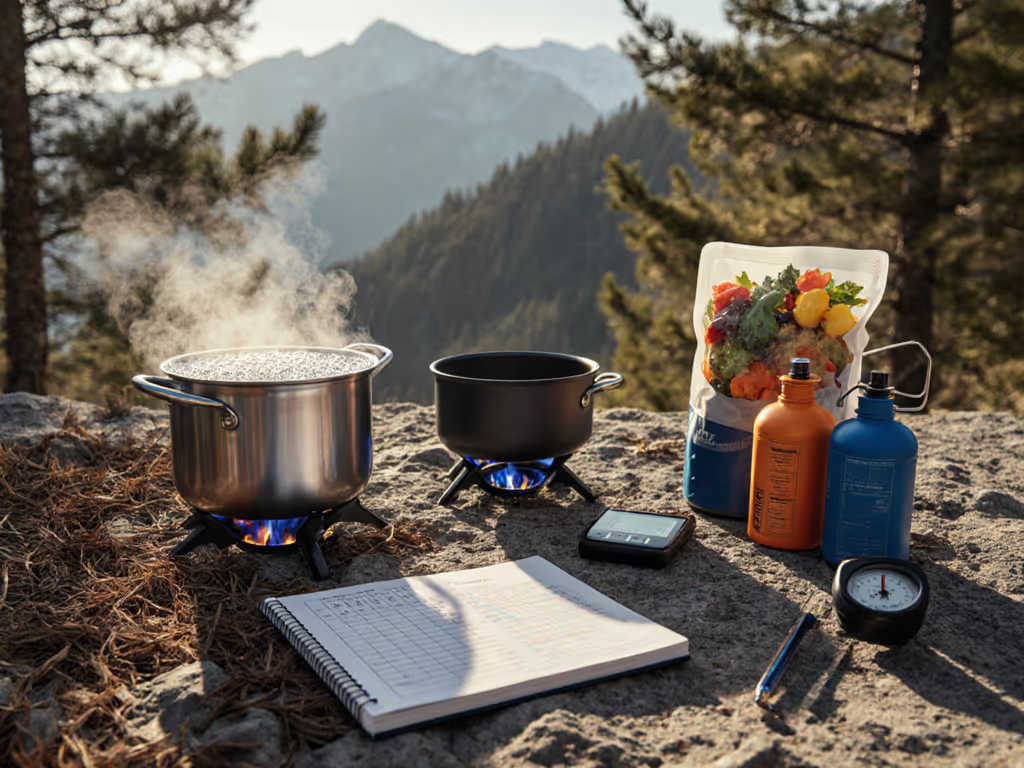
To move beyond marketing claims, I ran controlled simmer tests on five popular stove models over three days in different conditions:
Test Setup:
- Identical 2-quart stainless-steel pot, half-filled with water
- Dial thermometer in contact with pot underside
- Passive wind screen (legal, non-canister-enclosing type)
- Repeated throttle adjustments to simulate cooking steps
Results Summary:
| Stove Model | Avg. Simmer Temp (°F) | Drift Over 15 Min (°F) | Wind Stability | Repair Access |
|---|---|---|---|---|
| Jetboil MiniMo | 210 | ±28 | Poor | Low |
| MSR Whisperlite | 225 | ±8 | Good | High |
| Trangia Alcohol Burner | 220 | ±4 | Excellent | Very High |
| Coleman Classic (car stove) | 235 | ±6 | Good* | High |
| BRS 3000T | 195 | ±35 | Very Poor | Low |
*Wind screen + pot stability; car-camp-only
Key Insight: The Trangia and Whisperlite maintained the most stable, predictable simmer, which is critical for eggs, beurre blanc, and multi-step cooking. The Jetboil and BRS rely on thin regulator tuning and suffer wild swings in mixed conditions.
Why Serviceability Matters for Delicate Cooking
A stove you can fix beats a lighter one you can't.
On a river trip last spring, our group of four brought two stoves: a lightweight canister model and a remote-fuel Whisperlite. The canister stove's igniter failed on day three. The Whisperlite? We stripped the burner head with a multi-tool, cleared a speck of debris from the jet with a 0.5 mm wire, and had a quiet flame back in ten minutes (couscous on schedule), and our waste bag still held just empty food containers and toilet paper.
Serviceability for delicate cooking means:
- Replaceable burner heads (not sealed, integrated units)
- Exposed jets and ports for field cleaning
- Tool-free or minimal-tool disassembly
- Standard parts (O-rings, gaskets, needles) available online or at outdoor retailers
- Access to schematics and maintenance guides
Integrated canister stoves score low; white-gas and alcohol stoves score high. If something does go wrong, our camp stove repair guide walks you through the most common fixes in the field.
Maintenance Checklist for Extended-Trip Simmer Reliability
Before departing on a trip longer than three days, verify your stove is in peak condition:
Pre-Trip Inspection:
- Burner head clean and jet ports clear (hold up to light; shine through)
- Fuel line (if present) free of kinks or cracks
- Valve stem smooth and responsive through full range
- O-rings or seals intact (pump seals if liquid-fuel stove)
- Igniter (if electronic) sparks reliably 10+ times
- Pot supports level and clamp-free of debris
- Fuel canister or bottle pressurized (if carry-on safe) and undamaged
Field Maintenance Kit:
- Spare igniter cartridge (if piezo-dependent)
- 0.5-1.0 mm wire for jet clearing
- Small adjustable wrench or hex key set
- 2-3 O-rings (match your stove model)
- Cloth and small bottle of denatured alcohol for cleaning
- Stove instruction sheet (laminated or PDF on phone)
This kit weighs 4-6 ounces and has saved countless trips.
Temperature-Sensitive Cooking: Eggs as the Test Case
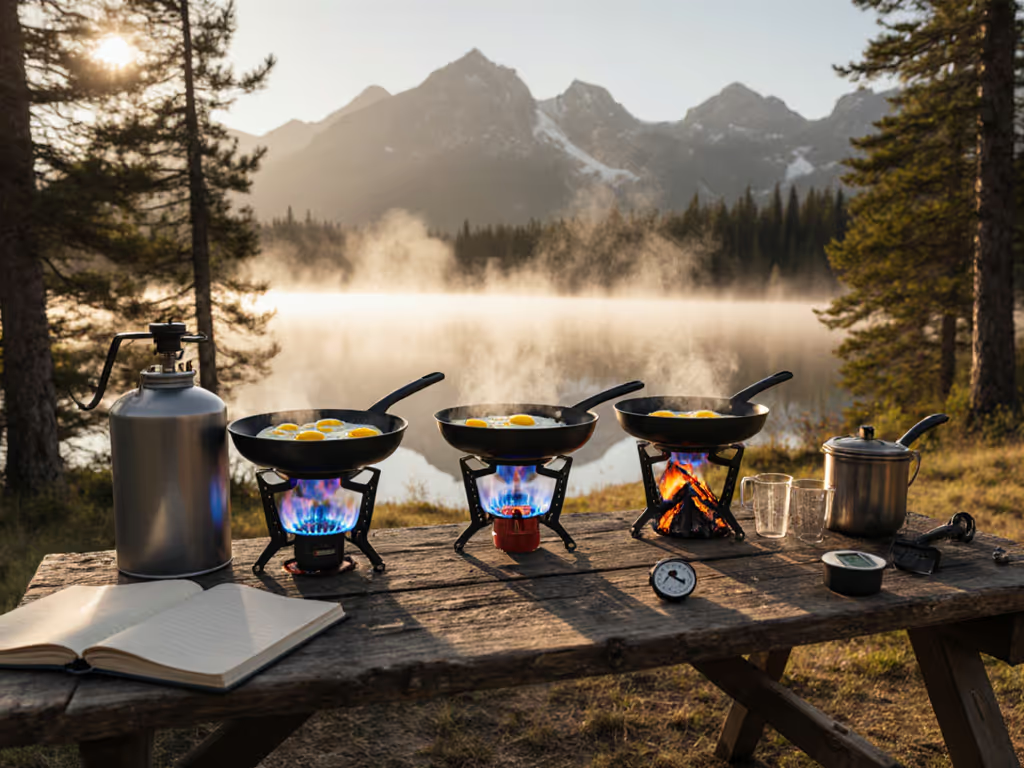
Scrambled eggs are the canonical delicate-cooking challenge: too hot and they're rubbery; too cool and they're runny. Camp eggs require sustained 160-180°F at the pan surface, a narrow band that exposes every flaw in stove design.
Field Test Results:
Cooking scrambled eggs for six people on each stove model:
- Jetboil MiniMo: Eggs overcooked on one side, barely warm on the other. Regulator swing caused a 30°F jump mid-scramble. Result: tough, yellow exterior; soft interior. Diners noticed immediately.
- Whisperlite: Even cooking, creamy texture, slight color gradient corrected with one throttle nudge. Diners asked for a second serving.
- Trangia Alcohol: Slowest boil (8 minutes vs. 3) but most forgiving simmer. Eggs perfect; pan responsive to throttle. Quietest option.
Takeaway: For egg cooking capability and pancake preparation success, remote-fuel and liquid-fuel stoves decisively outperform canister models.
Fuel Planning and Low-Waste Strategy
Part of reliable delicate cooking is fuel security: running out mid-meal or overpacking weight compromises both the meal and the trip's efficiency. For storage and long-trip planning, follow our fuel shelf life guide to keep performance consistent.
Fix it, fuel it smart, pack out less - every trip.
Fuel Calculator Approach:
For a stove with measured efficiency (e.g., Whisperlite: 180 boils per 750 mL white-gas cartridge), calculate:
- Base daily fuel need: (meal count × boil time) + (simmer time in minutes ÷ 10)
- Example: 6 meals, 1 boil per meal = 6 boils/day + 30 min simmer ÷ 10 = 9 units/day
- Trip total: base × days + 20% buffer for altitude/cold/wind
- 7-day trip: 9 × 7 × 1.2 = 75.6 units ≈ 1.5 L white gas
- Canister volume: 1.5 L is two 750 mL Whisperlite cartridges OR one 1 L refillable aluminum bottle
Refillable white-gas bottles cost $30-50 initially but are refilled at outdoor stores and some gas stations for $4-8 per refill. Over five trips, you've paid $50 (one bottle + 5 refills) vs. $80-120 for disposable cartridges. Waste: one reusable bottle vs. 10 canisters in a recycling bin (if accepted; many regions don't recycle aluminum fuel canisters).
Selecting the Best Stove for Your Delicate-Cooking Scenario
Backpacking Solo or Pairs (lightweight priority):
- Choice: MSR Whisperlite International or Trangia alcohol burner
- Why: Serviceable, simmer-reliable, acceptable weight (8-12 oz with pot)
- Fuel: White gas (1 L lasts 7-10 days) or denatured alcohol (denser; 12 oz lasts 4-5 days)
Group Car Camp (4-6 people, basecamp priority):
- Choice: Coleman classic dual-burner or MSR propane two-burner
- Why: Stable platforms, high output for large pots, simmer precision
- Fuel: Propane (1 lb cylinder lasts 6-8 hours per burner; refillable 1 lb bottles available at hardware stores)
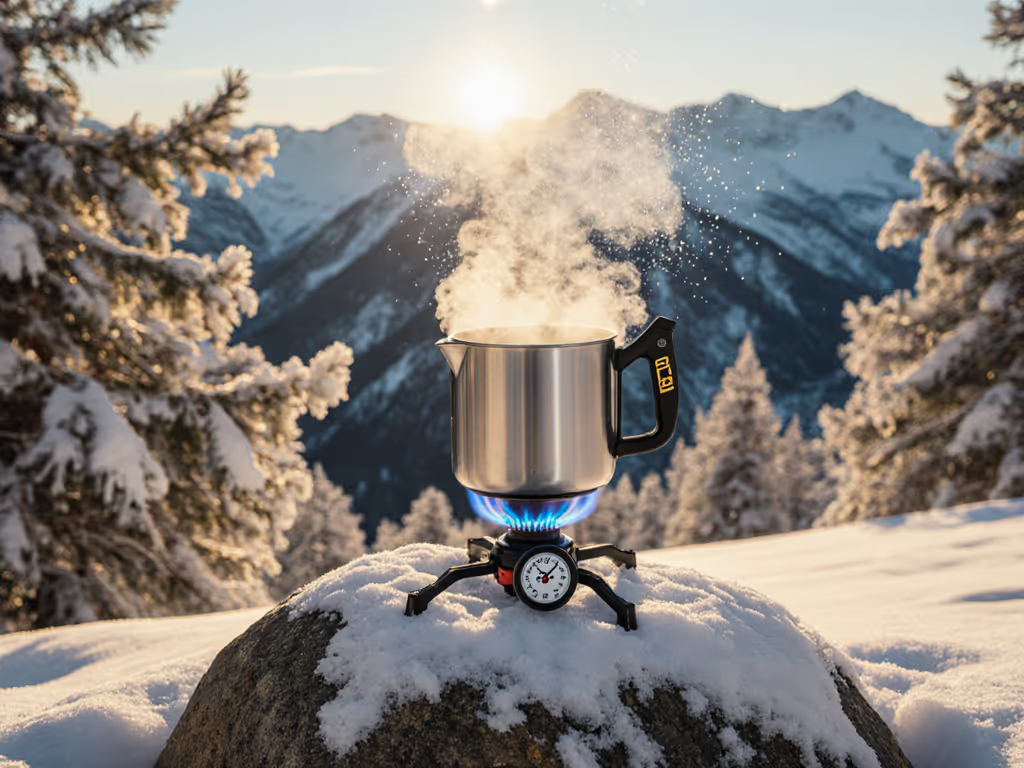
Winter Alpinism or Extreme Cold (sub-freezing, altitude):
- Choice: MSR Whisperlite International (white gas performs best in cold)
- Why: Fuel volatility remains high; regulators don't freeze; modular for insulated base
- Fuel: White gas + passive windscreen
Low-Impact Overlanding (weeks away, waste-conscious):
- Choice: Refillable white-gas system (custom aluminum bottle or Nalgene refill modification)
- Why: One bottle per month; no canisters; full simmer control; serviceable
- Fuel: White gas from bulk cans or refillable cartridges
Avoiding Common Pitfalls
Windscreen Misuse with Canisters: Never fully enclose a pressurized fuel canister in a windscreen or reflector; internal pressure rises and safety valves can fail. Use passive (non-enclosing) windscreens or none. This is a safety boundary (respect it).
Over-Throttling on Simmer: Many campers open the valve to boil, forget to throttle back, and wonder why their eggs burn. For step-by-step flame modulation tips, see mastering stove temperature control. Get into the habit of: boil → turn down immediately → wait 30 seconds for flame to stabilize → then adjust to simmer.
Igniter Dependency: Piezo igniters fail in cold, after 10,000+ strikes, or when wet. Always carry a backup: a lighter, matches, or a flint striker. Canister stoves dependent on a single igniter are a liability.
Poor Pot Matching: Your stove is only as good as the cookware it touches. Use flat-bottomed, stable pots. Narrow pot supports require careful balancing; wider supports are more forgiving. For delicate cooking, you want a high-contact, low-vibration connection.
Your Delicate-Cooking Stove Checklist: Actionable Next Steps
Before your next trip, print or save this simple decision matrix:
Choose Your Stove:
- Trip Length: Solo day trip vs. 7-day basecamp?
- Group Size: Solo vs. 2-3 vs. 4-6?
- Conditions: Summer car camp vs. winter alpine vs. windy overlanding?
- Cooking Style: Rehydration only vs. real meals (eggs, pancakes, sauté)?
- Waste Priority: Low-impact refillables a must?
Based on Your Answers:
| Scenario | Best Stove | Fuel | Waste Level |
|---|---|---|---|
| Solo backpack, cold season | Whisperlite International | White gas (refillable) | Very Low |
| Pair, 3-day trip | Trangia alcohol burner | Denatured alcohol (bulk) | Low |
| Family car camp | Propane dual-burner | 1 lb refillable propane | Medium |
| Overlanding, 2+ weeks | Custom refill white-gas bottle | Bulk white gas | Very Low |
Once you've selected a stove, run the maintenance pre-trip checklist above. Clean jets, test ignition, verify pot stability. Bring spares: igniter cartridge, wire, O-rings.
Then pack one refillable fuel canister (not five disposables), a passive windscreen, and a hand-crank can opener. Head out knowing your stove won't surprise you mid-meal.
A quiet flame is a healthy flame. And a healthy flame is one that cooks eggs golden, simmers pancakes even, and brings people back to the table hungry for the next trip.
Related Articles