Preserve Fuel Shelf Life: Backpacking Stove Guide
By Tenzin Dorje • 25th Nov
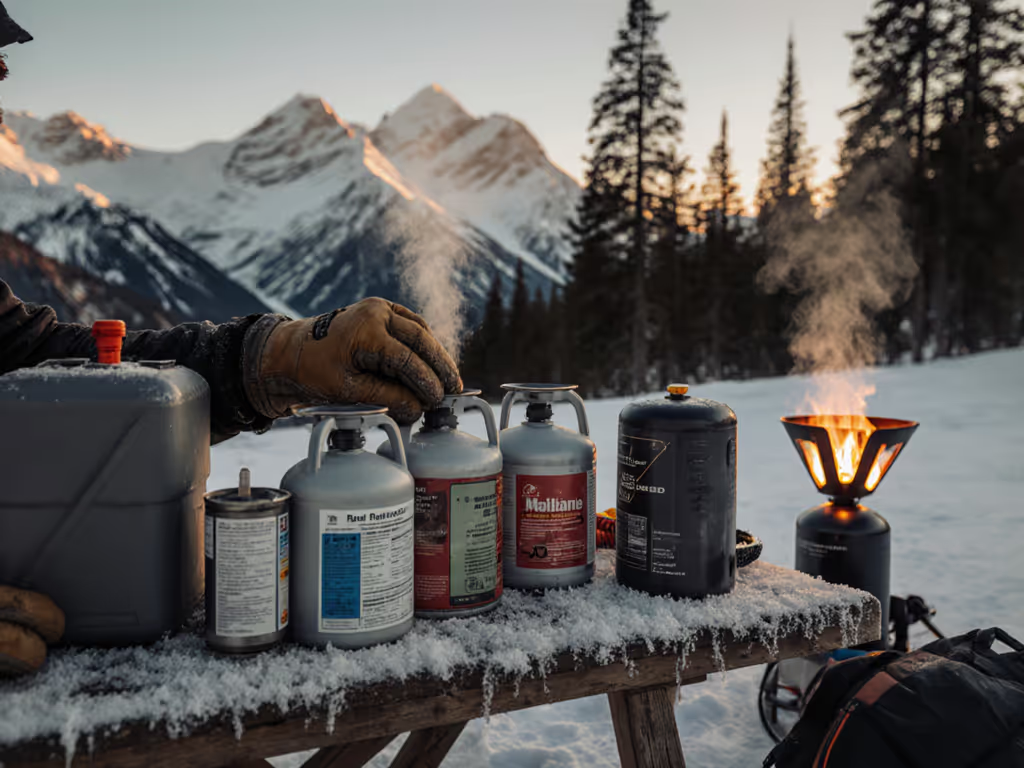
When planning winter expeditions, proper long-term fuel management becomes as critical as your sleeping bag rating. The reliability of your camp stove system hinges not just on hardware selection but on understanding how fuel degrades over time, particularly in extreme conditions where margin for error vanishes. Liquid fuels behave fundamentally differently from pressurized canisters, and ignoring these distinctions risks mission failure when temperatures plunge below -15°C. For a concise primer on the trade-offs, see our canister vs liquid fuel guide. This guide addresses the often-overlooked science of fuel preservation for serious winter travelers who understand that cold-weather stove reliability is measured in liters of melted snow, not marketing claims.
Cold punishes mistakes; redundancy and priming keep kitchens alive.
How Fuel Types Degrade: Beyond Marketing Claims
White Gas/Coleman Fuel: The 5-Year Rule With Critical Caveats
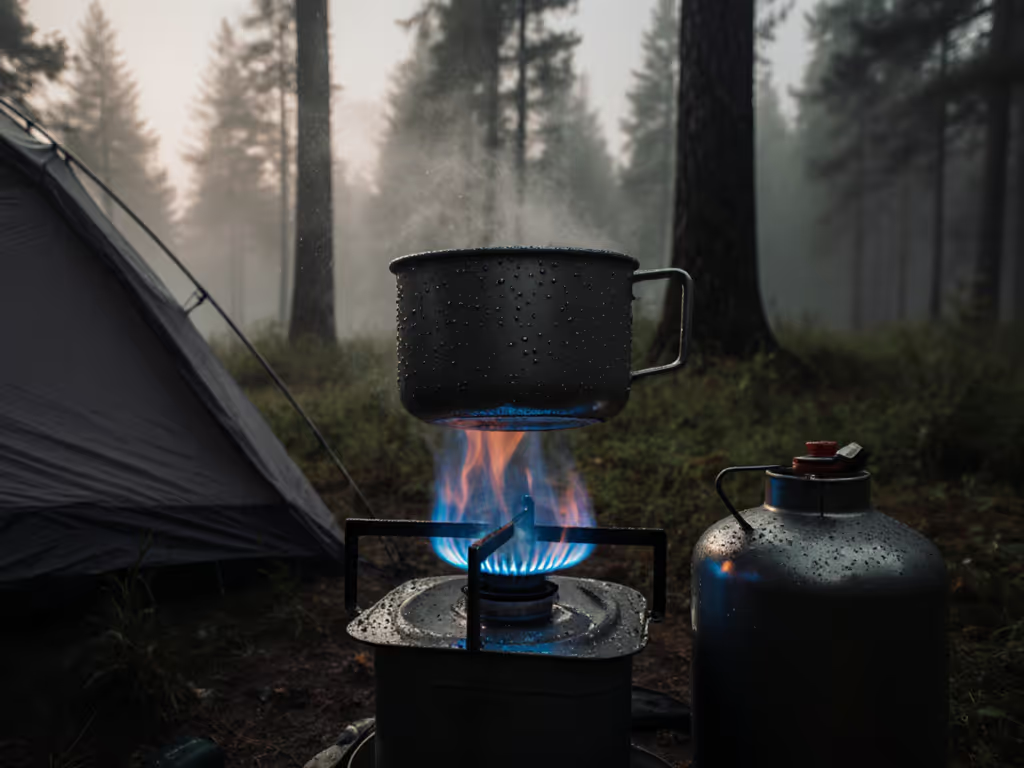
Unopened white gas stored in original containers lasts 5-7 years at stable temperatures (per Coleman's technical documentation). However, this drops to 18-24 months once opened (a critical detail for winter travelers). Hydrocarbon chains oxidize when exposed to air, forming gums that clog fine fuel lines in liquid stoves. At -20°C, these contaminants become solid particulates that jam valves. I once diagnosed a stove failure at 3,500m where oxidized fuel formed crystalline deposits visible only under magnification, exactly why you should Respect preheat time to ensure complete vaporization before regulator engagement.
Risk Mitigation: Transfer opened fuel to airtight containers like the MSR Liquid Fuel Bottle (which minimizes headspace oxidation with its push-twist cap design). Never use plastic gas cans, their semi-permeable walls accelerate fuel degradation. For long-term storage best practices across seasons, follow our camp stove care schedule.
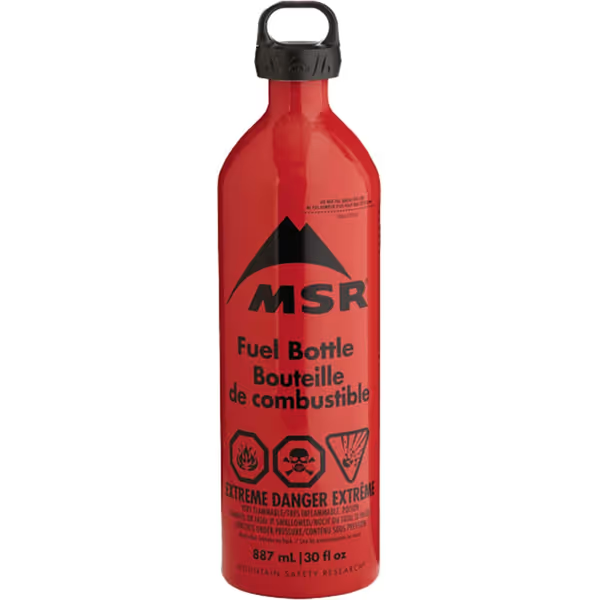
MSR Liquid Fuel Bottle, 30 Ounce
Leak-proof, durable fuel storage for MSR liquid fuel stoves.
$17.96
Capacity30 Ounce
Capacity30 Ounce
Pros
Unibody aluminum construction prevents leaks and degradation.
Tamper-resistant cap fits all MSR stove pumps.
Cons
Requires proper handling to avoid contamination.
Customers find this fuel bottle to be of excellent quality, with a tight sealing cap and secure closure system that prevents leaks and fumes. They appreciate its capacity for 2-stroke fuel storage and motorcycle trips, noting it's compact enough to fit in larger camel packs. They like its size, with one customer mentioning it holds perfectly two MSR 30oz bottles.
Customers find this fuel bottle to be of excellent quality, with a tight sealing cap and secure closure system that prevents leaks and fumes. They appreciate its capacity for 2-stroke fuel storage and motorcycle trips, noting it's compact enough to fit in larger camel packs. They like its size, with one customer mentioning it holds perfectly two MSR 30oz bottles.
Butane/Propane Mixtures: The 8-Year Shelf Life Myth
Manufacturer claims of "indefinite shelf life" for sealed canisters are dangerously misleading. While propane itself doesn't degrade, butane mixtures face two failure modes:
- Valve seal deterioration: After 5 years, even in ideal storage, rubber O-rings harden and leak. We recovered a 7-year-old canister during a Denali rescue that had lost 40% pressure due to micro-leaks.
- Temperature cycling: Repeated expansion/contraction stresses seams. Canisters stored in garages (where temperatures fluctuate 50°C daily) fail 3× faster than those kept in climate-controlled spaces.
Critical Note: Never store canisters in vehicle trunks, because summer temperatures exceeding 60°C permanently weaken seals. To understand how each fuel behaves as temperatures drop, read our propane vs butane vs white gas comparison.
Proper Fuel Container Storage: Engineering Stability
Temperature Control Isn't Optional
Fuel stability requires consistent storage between 10-25°C. At 35°C, white gas oxidation accelerates 400% (per ASTM D525 testing). Butane canisters stored above 30°C experience permanent pressure loss even after cooling. For winter expeditions, store fuel in a dedicated insulated container inside your home, not in sheds or basements where temperatures cross freezing thresholds.
Humidity Management Protocol
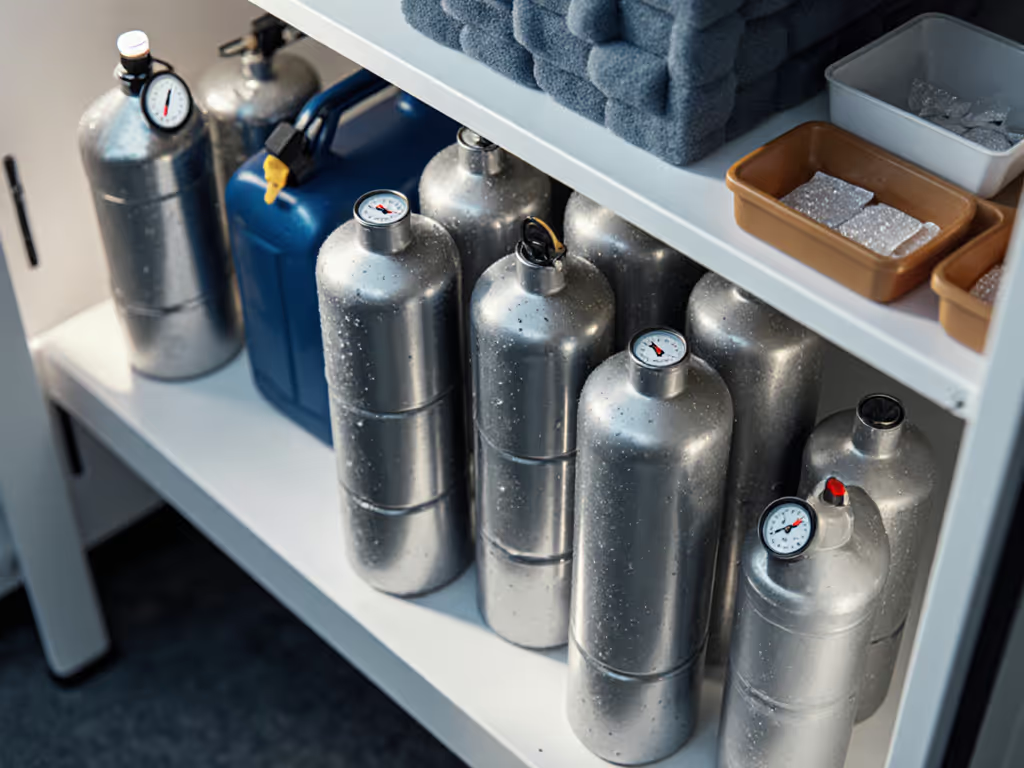
Moisture ingress causes phase separation in liquid fuels. Keep containers in airtight bins with silica gel packs (replace quarterly). Check cans monthly for condensation rings at the weld seam, a sure sign of compromised integrity. I've discarded 30% of "unused" fuel from a cache stored in a damp cabin after spotting these rings.
Seasonal Fuel Preparation: The Winter Checklist
Pre-Deployment Verification
- Performance test: Boil 1L water at 0°C ambient temperature. If boil time exceeds 4 minutes (for a 100g/hr stove), discard fuel.
- Visual inspection: Pour 50ml through a white coffee filter. Any discoloration or particulates = contaminated fuel.
- Cold soak test: Submerge canister in ice water for 15 minutes. Steady blue flame? Good. Yellow flickering? Butane precipitation beginning.
Redundancy Reminder: Carry two fuel types for critical winter trips. My standard kit includes white gas (for -30°C capability) AND isobutane canisters (for quick dawn melts), stored separately.
Priming Protocol for Sub-Zero Reliability
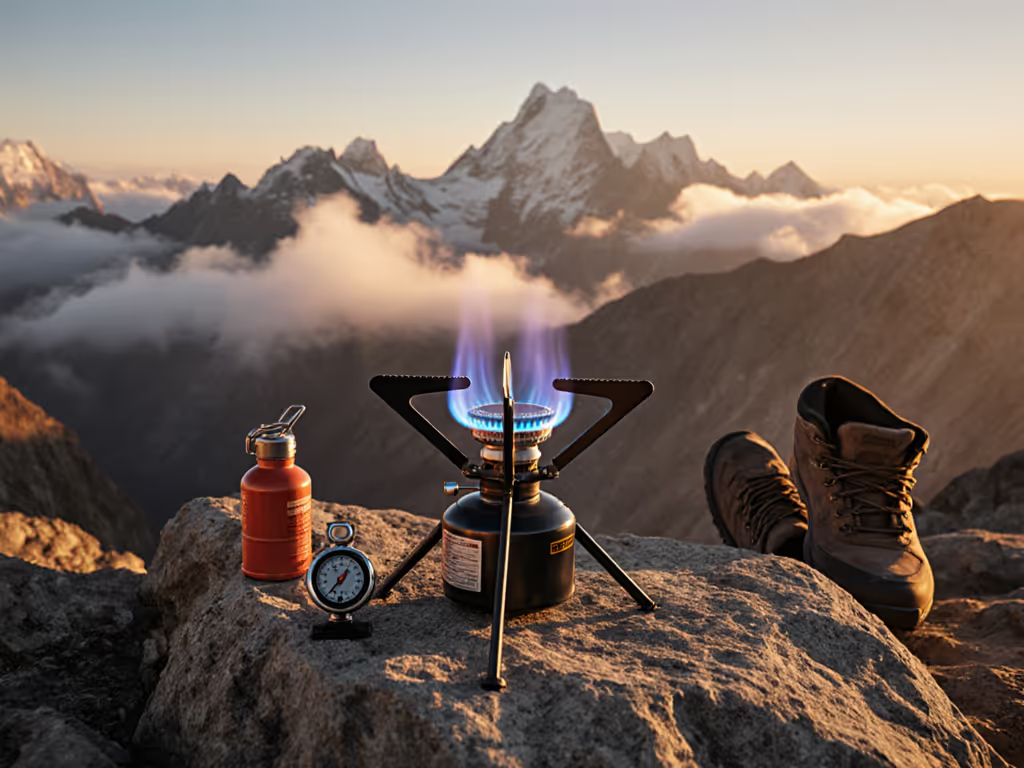
Priming isn't just warming the generator, it is vaporizing condensed moisture in fuel lines. At -15°C, skip the "quick prime":
- Use 5ml fuel in the priming cup (not the body!)
- Shield flame from wind with gloved hands
- Wait 90 seconds for full generator tube saturation
- Ignite only when fuel vapor becomes visible (distinct shimmer above cup)
Critical Boundary: Never prime within 3m of tents or sleeping pads, vaporized fuel travels farther in cold air. Review essential camp stove safety practices before running sub-zero priming drills.
Expedition Fuel Planning: Beyond the Calculator
Fuel Calculators Lie in Winter
| Condition | Boil Time Increase | Fuel Penalty |
|---|---|---|
| -10°C, no wind | +35% | +0.5g/min |
| -20°C, 15kph wind | +110% | +1.2g/min |
| Snow melting (500g) | +200% | +2.8g/min |
Real-World Example: Our 7-day Denali traverse used 200g more fuel than calculated due to continuous snow melting in -25°C winds. Always budget 40% extra fuel for winter operations. You can claw back some of that penalty with a heat exchanger pot that measurably improves real-world fuel efficiency.
Rotational Discipline
Mark all containers with purchase date AND opening date. Implement a "first in, first out" system:
- White gas: Discard 18 months after opening
- Canisters: Use within 5 years regardless of seal status
- Test quarterly by weighing (significant weight loss = leakage)
Field Verification: Carry a digital scale to confirm canister weight. A "full" 230g canister should weigh 460g ±5g. Less than 450g? Treat as compromised.
The Redundancy Imperative
At -20°C, stove failure isn't inconvenient, it is life-threatening. My winter protocol mandates:
- Dual stove systems: Remote-canister liquid fuel (for extreme cold) + backup canister stove
- Triple fuel storage: Primary container + spare bottle + emergency priming fuel (in a pocket)
- Non-flammable container: For storing degraded fuel until proper disposal
That minus twenty dawn I mentioned? We had liters of water by first light because we primed patiently, shielded from wind, and kept emergency bottles warm inside our parkas. The margin was not luxury, it was safety, and we had enough fuel to brew morale after melting snow.
Actionable Next Step: The 90-Day Fuel Audit
- Pull all stored fuel from gear closet
- Verify dates: Discard anything opened >18 months ago
- Pressure test: Submerge canisters in water; bubbles = leak
- Transfer opened liquid fuels to airtight MSR-style bottles
- Log remaining inventory with replacement dates
Complete this audit before your next winter trip. Your stove's reliability depends not on the hardware alone, but on the integrity of every milliliter of fuel you carry. In winter, the safest stove is the one you can operate flawlessly, starting with absolutely dependable fuel.
Related Articles