
Humidity Impact on Tropical Stove Performance
By Ingrid Sørensen • 3rd Mar
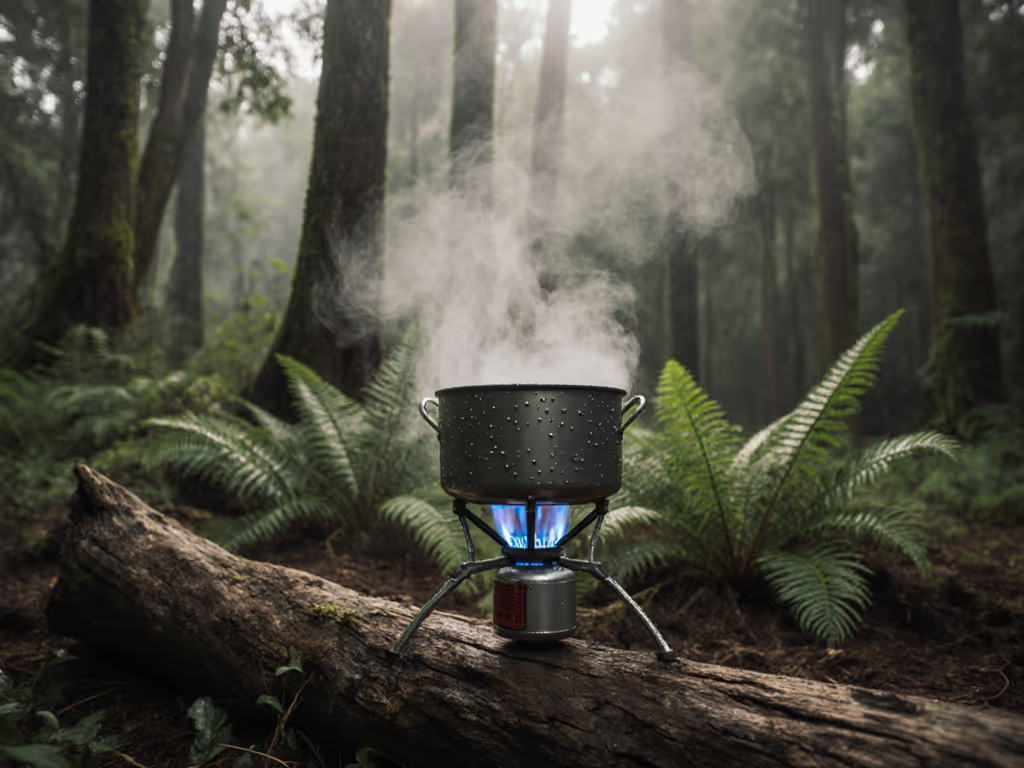
Humidity impact on stoves might not top your pre-trip checklist, but in tropical and monsoon environments, it's the reason your boil times stretch from three minutes to eight, your simmer becomes a slow-rolling boil, and fuel consumption climbs beyond every online calculator's estimate. Understanding how moisture affects your stove (and knowing how to counter it) is the difference between a kitchen that just works and one that leaves you frustrated as the group grows hungry.
How Humidity Degrades Stove Performance
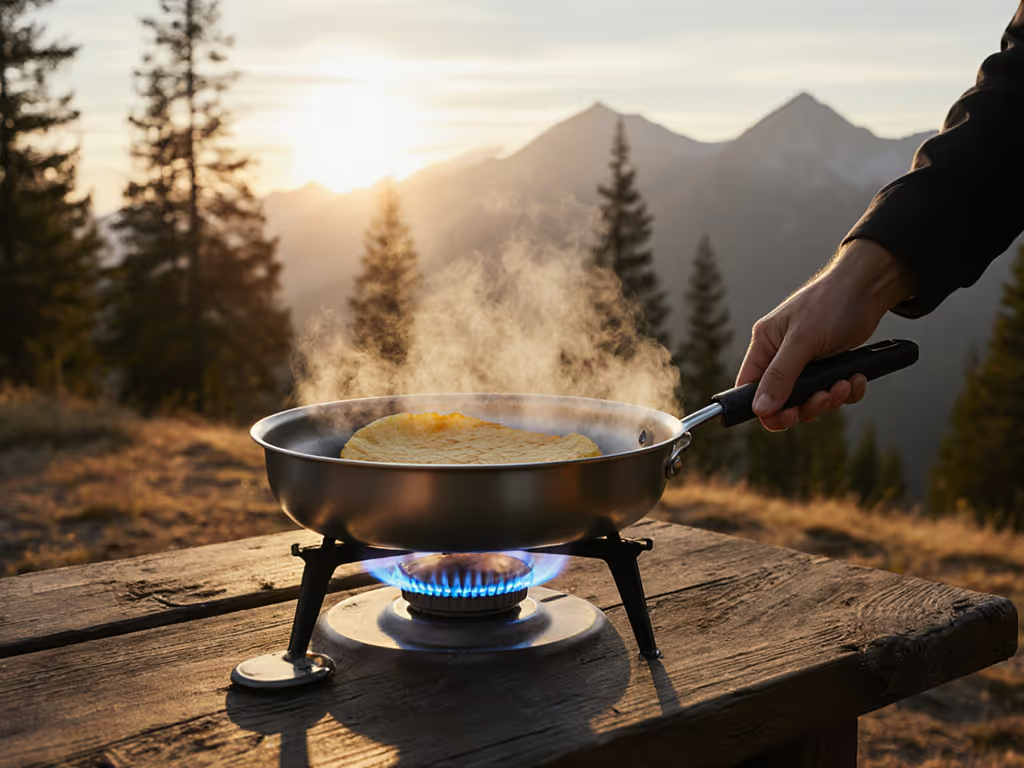
When I planned a coastal July trip for a family and their lactose-free friend (pancakes and a mild curry were the promise), I learned this lesson in real time. The forecast said "overcast but clear." What it didn't say was "90% relative humidity." My reliable liquid-fuel stove, which usually boils 2 cups of water in under five minutes, took nearly eight. The griddle wavered between too-hot and uneven. Luckily, a wide, stable burner and a proper windscreen saved breakfast. But the humidity's teeth were real. For field-tested picks tailored to jungle moisture, see our best stoves for humid environments.
Here's why: Humidity reduces the oxygen available for combustion. Moist air is lighter than dry air at the same temperature and pressure, which means the moisture displaces oxygen molecules. When you light your stove in a humid tropical environment, water vapor in the air occupies partial pressure that would otherwise belong to oxygen. Your flame receives fewer oxygen molecules, so heat output drops, sometimes dramatically.
The Fuel Absorption Problem
Beyond air composition, alcohol fuels actively absorb moisture from humid air over time. If you're carrying liquid alcohol fuel in a container that's been opened or stored in a tropical garage for even a few days before departure, water content in the fuel will increase measurably. The more water in your fuel, the lower the stove's BTU output will be. You're literally burning an emulsion instead of pure fuel. This compounds the oxygen issue: your burner is weaker to start, and the fuel itself is diluted.
Barometric Pressure and Tropical Weather Systems
Tropical regions often experience lower barometric pressure during monsoon season or storm development. Low barometric pressure and high humidity together create particularly poor burn conditions. For a broader climate context, see our desert vs monsoon stove performance. The air-fuel mixture in your stove's combustion chamber becomes harder to achieve efficiently. Canister stoves suffer most acutely: pressure inside the canister drops as ambient pressure falls, reducing fuel flow and flame intensity. Alcohol stoves feel the shift too, though less dramatically.
Tropical Stove Performance: What Changes, and What Doesn't
Misunderstanding what humidity actually affects is half the battle. Let me clarify.
Performance parameters that degrade:
- Boil times lengthen significantly (often 40-60% longer than lab/home tests).
- Simmer stability narrows: it's harder to hold a gentle bubble; you get either a boil or a near-stall.
- Fuel efficiency drops: the same stove burns more fuel to achieve the same water temperature in humid versus dry conditions.
- Integrated piezo igniters may become less reliable; moisture in the air and on the electrode makes sparking inconsistent.
Performance parameters that remain fairly stable:
- Total combustion reaction (fuel still burns; just less efficiently).
- Pot stability or support geometry (hardware doesn't change).
- Heat distribution patterns (though they're hard to manage with weaker flame).
Wind, by contrast, is the primary enemy of stove efficiency, and it's independent of humidity. A 10 mph breeze can negate half your heat output. Wind and humidity together, though, form a multiplier effect: you're running a weak flame in destabilizing gusts.
Stove Type Comparisons in High-Humidity Environments
Canister Stoves (Propane/Isobutane Blends)
Pros: Simple, lightweight, clean burn, no priming fuss.
Cons in tropical humidity: Fuel pressure drops sharply with barometric pressure; poor output in monsoon or pre-storm conditions. Isobutane, common in three-season canisters, has a boiling point of 31°F; in tropical heat, you're at the mercy of pressure dynamics. High humidity doesn't directly damage the canister, but the combination of heat and low air pressure can create inconsistent fuel delivery.
Best for: Dry tropical seasons, car-camp basecamp use where a preheated canister in warm shade helps.
Remote-Canister Stoves (Hose-Fed)
Pros: Burner sits lower and more stable. Hose allows pot to rest on ground for stability. Better flame control than integrated tops.
Cons in tropical humidity: Same pressure/air-oxygen limitations as direct canister. Humidity doesn't damage the hose or regulator specifically, but a regulator designed for sea-level, dry-air conditions may not meter fuel optimally in dense, moist air.
Best for: Group or car-camp cooking where pot stability is paramount; less ideal for high-humidity backpacking unless you're running a high-altitude or winter-blend canister.
Liquid Fuel (White Gas, Kerosene)
Pros: Fuel is stable; performance is less pressure-dependent than canister. Evaporation rate remains predictable even in humid air (though slower in cold). Output is robust.
Cons in tropical humidity: Priming ritual is messier in damp air. Flame is hotter and harder to simmer, especially if you're not practiced. Moisture on the exterior of the stove can cause condensation on the pot.
Best for: Extended tropical trips where fuel can be found locally; reliable output despite air-pressure fluctuations.
Alcohol Stoves
Pros: Simple, refillable, lightweight, no pressure components.
Cons in tropical humidity: Alcohol absorbs water directly from humid air. An open container or a partially full bottle sitting in 85% humidity for three days will accumulate noticeable water content, degrading performance. Boil times extend; simmer becomes nearly impossible. The stove itself doesn't fail, but the fuel does.
Best for: Dry-season tropical trips, or trips where you can source or produce fuel locally and burn it quickly. Requires disciplined fuel management in monsoon.
Practical Strategies for Humidity-Resistant Camp Kitchens
1. Prioritize Wind Management Over All Else
Humidity is a multiplier of wind's effect. Windscreen design is probably THE most important component in your cooking system. A wide, stable burner with a real windscreen (not a flimsy foil cone) shelters the flame and radiant zone from both wind and moisture-laden gusts. The windscreen should:
- Sit at least 2-3 inches away from the flame (hot enough to assist air circulation but not so close it burns or chokes the fire).
- Extend down to ground level to block lateral drafts.
- Be tall enough to shelter the entire pot.
- Use a material rated for sustained heat (high-temperature aluminium, stainless steel).
In my coastal trip, the windscreen wasn't just about wind management (it also contained the humidity's dampening effect on the flame), effectively trapping warmer, drier air around the burner.
2. Seal and Rotate Fuel Reserves
If you're carrying liquid fuel (alcohol or white gas), use airtight containers. Glass bottles with rubber-sealed lids are ideal; plastic bottles can allow slow permeation over weeks. Rotate fuel stock: in humid climates, assume a 3-5 day "shelf life" for opened alcohol containers. For storage tactics that prevent moisture-related degradation, read our fuel shelf life guide. Buy smaller quantities more frequently, or arrive a day early to source fresh fuel locally.
For canister stoves, resist the urge to "top off" partially used canisters in humid storage. The risk of water ingress outweighs a marginal fuel savings.
3. Build a Fuel Margin Into Your Timeline
Timelines and prep order matter when humidity stretches every boil:
- Add 30-50% extra time to your camp-kitchen schedule in high-humidity conditions.
- If your dry-climate test showed 20 minutes to boil a large pot of pasta water and prepare sauce, budget 28-30 minutes in tropics.
- Start boiling before you're ready to cook; use that wait time for ingredient prep and menu communication.
Family-proof kitchens: stable simmer, quick boils, zero drama. This means starting fire, fuel, and pot prep before hunger sets in.
4. Test Your System Pre-Trip in Realistic Conditions
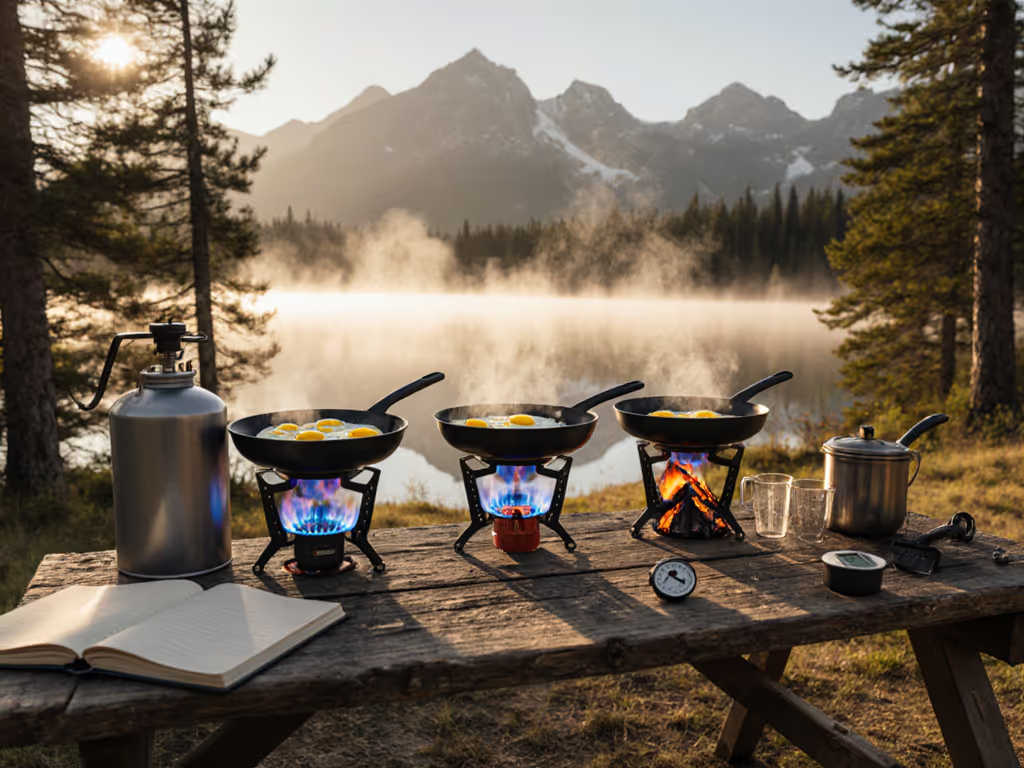
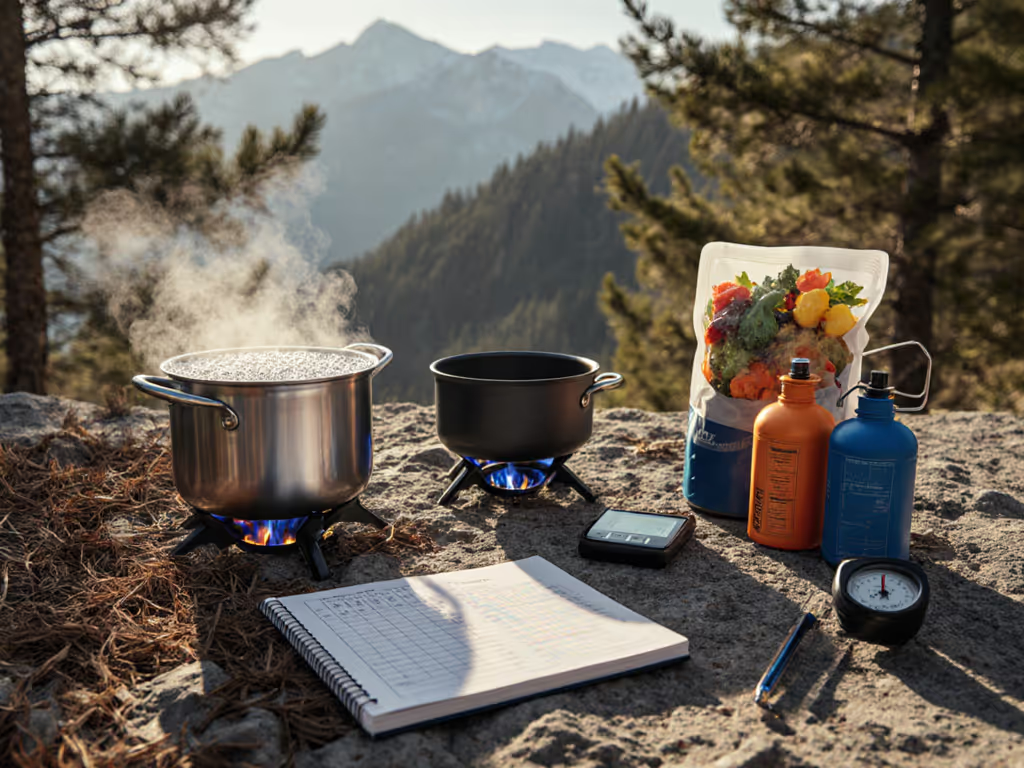
Wet-environment stove tests are invaluable. Set up your stove on a humid, breezy afternoon (coastal parks or after-rain afternoons work well). Time your boil. Measure fuel consumption. Write down the temperature, humidity (a cheap digital hygrometer costs $10), and wind speed (or estimate: light breeze vs. moderate vs. gusty). These are your baselines. If you travel to a new tropical zone, repeat the test on arrival, using local fuel if possible.
5. Invest in Pot-and-Burner Pairing
Not all pots perform equally over a weak or erratic flame. Simmer is a skill and a feature. Choose pots with:
- Flat, broad bases that make stable contact with burner supports.
- Thick bottoms (hard anodized or tri-ply stainless) that distribute heat and resist hot spots.
- Lids that seal well, to trap steam and speed boiling in high-humidity air.
A wide, shallow base is more forgiving in tropical conditions than a narrow, tall pot.
6. Inclusive Menu Notes and Contingency Planning
When humidity stretches timelines, a rigid menu collapses. Instead, build flexibility:
- Primary plan: curries, braises, and stews that tolerate long, gentle heat and variable timing.
- Backup plan: no-cook or minimal-cook options if the stove underperforms (energy bars, overnight oats, sandwiches).
- Dietary inclusivity: ensure your "Plan B" and "Plan C" accommodate any participant's needs (dairy-free, gluten-free, etc.).
On that coastal weekend, I had pasta and jarred sauce as a fallback — not gourmet, but filling and kind to each person at the table.
7. Monitor Condensation and Ventilation
In high-humidity tropical air, condensation forms rapidly on cooler surfaces. Check pot bottoms and lids regularly; excess water pooling can drip into the cooking food or extinguish a weak flame. When cooking in a shelter (tent vestibule during a storm), ensure real ventilation. Humid tropical air inside a sealed shelter, plus an active stove, risks CO buildup faster than you'd expect. Crack a door or window, even in rain.
Actionable Next Steps: Building Your Tropical Stove Kit
Before your next high-humidity trip:
-
Identify your stove type and look up its performance specifications in hot, humid air (or test locally). Note the temperature and humidity conditions cited in any online review or manual.
-
Procure a high-quality windscreen suited to your stove. If your current one is flimsy, upgrade before the trip. This single component will likely add 20-30% to your effective heat output in tropical conditions.
-
Run a wet-environment stove test this week. Time your boils, note conditions, and document fuel consumption. Compare results to your lab or home baseline. Factor the difference into your fuel packing for the real trip.
-
Draft a flexible meal timeline that adds 30-50% buffer to boil-and-simmer tasks. Write down inclusive menu notes and contingencies.
-
Source or seal fuel containers. If carrying liquid fuel, use airtight glass. If using canisters, check valve function and bring a backup canister if the trip is longer than 4 days.
-
Brief your group on how humidity and wind will change stove performance and meal timing. Lower expectations now, celebrate fast meals if conditions cooperate.
When you've paired a stable, wide-based burner with a real windscreen, dialed your pots and fuel to the season and site, and built your menu and timeline to respect humidity's reality, you've built something reliable. You're no longer guessing whether pancakes will cook golden or whether the curry will scorch. You're planning. You're cooking for people who depend on you, and they'll taste the difference.
Related Articles