Stove Flame Color Science: Read Combustion Efficiency
By Tenzin Dorje • 21st May
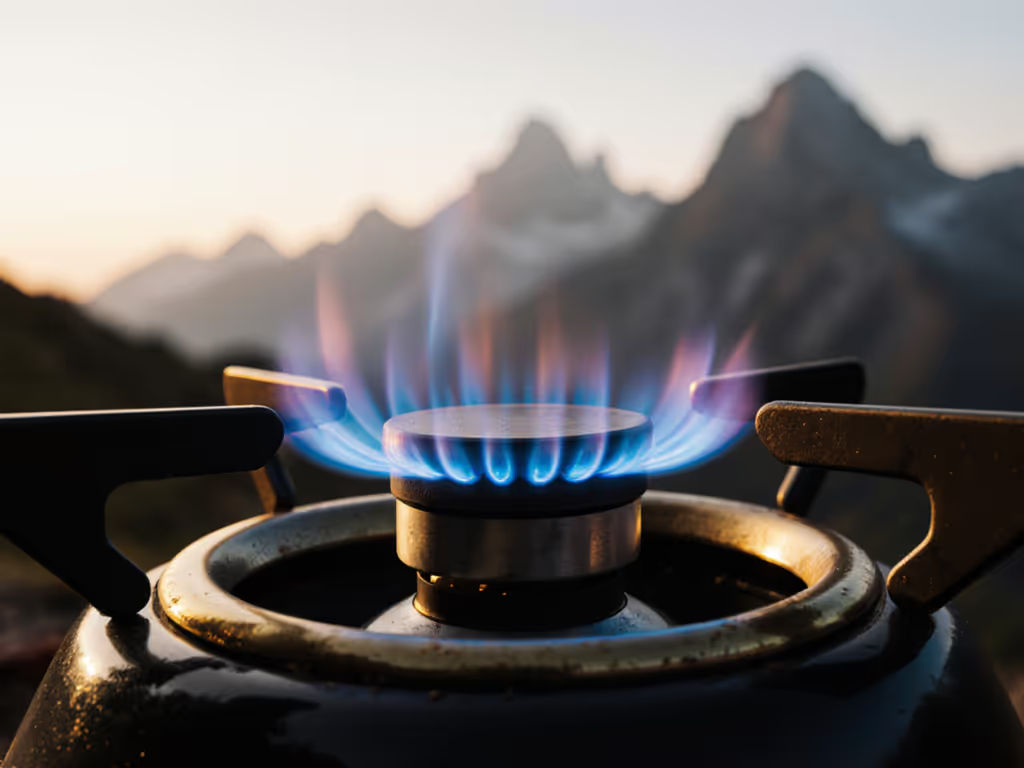
If you pay attention to stove flame color science, your flame becomes a live dashboard of combustion efficiency indicators. Instead of guessing why your boil times drift or why a stove struggles in the cold, you can read what the flame is telling you and act before it turns into a safety or fuel-shortage problem. For a fuel-by-fuel breakdown of cold-weather performance, see our propane vs butane vs white gas comparison.
In winter, the safest stove is the one you can operate flawlessly. Flame color is part of that fluency.
FAQ Deep Dive
1. Does a blue flame always mean efficient combustion?
Mostly, but not always, and not in the way marketing often claims.
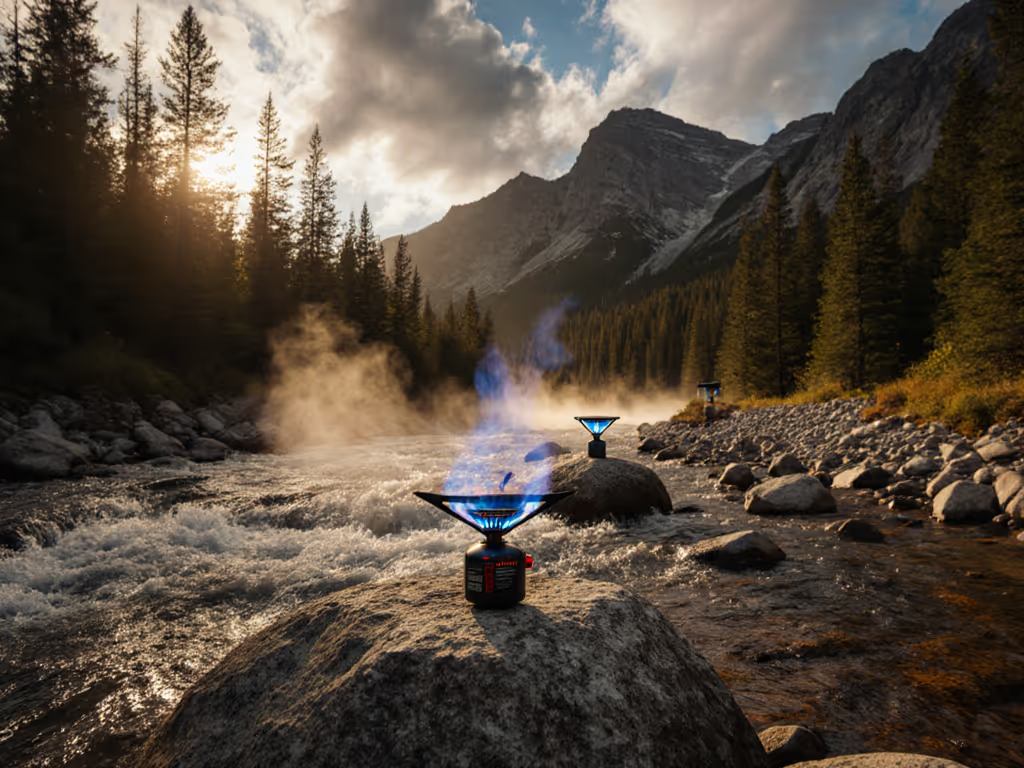
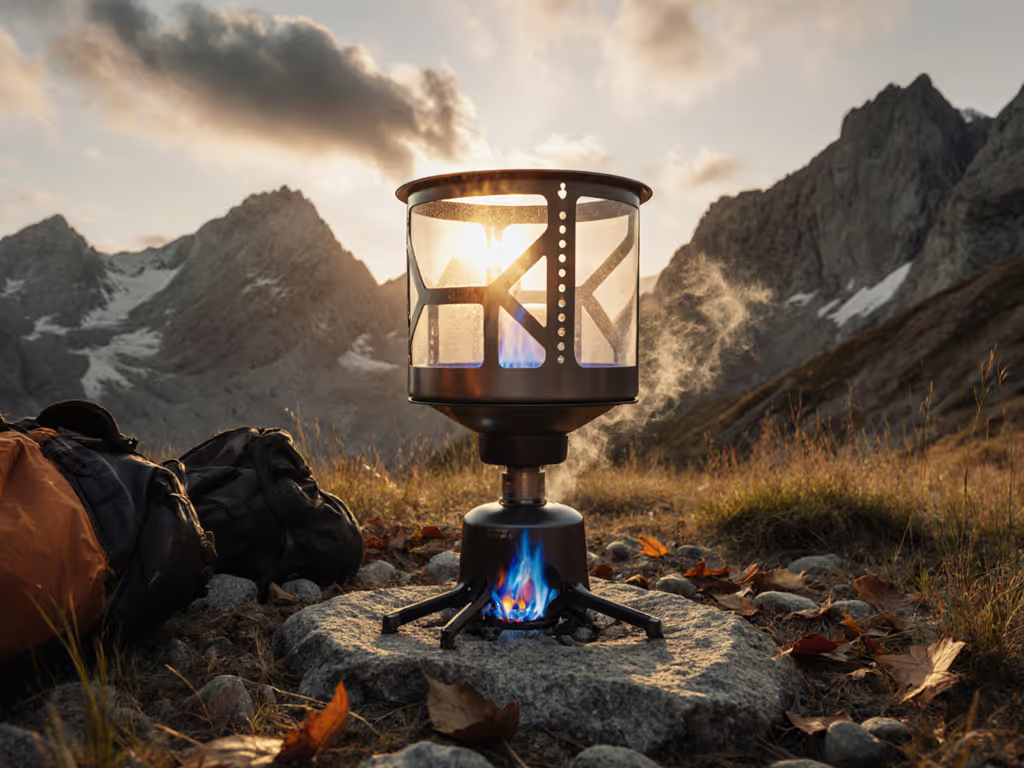
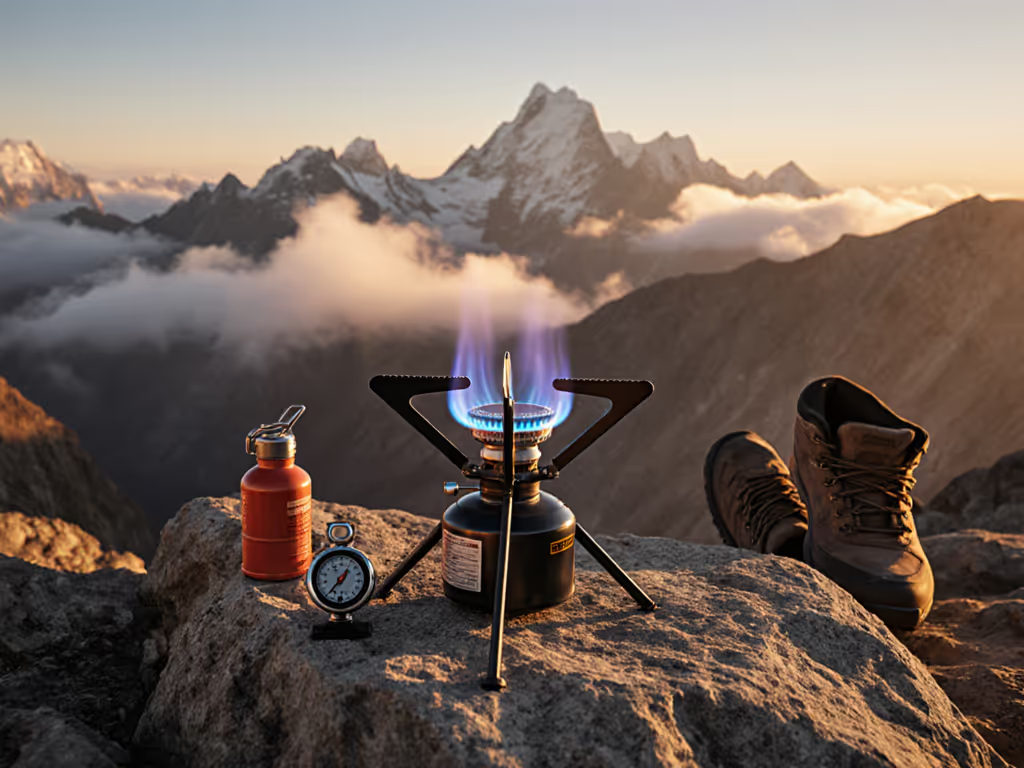
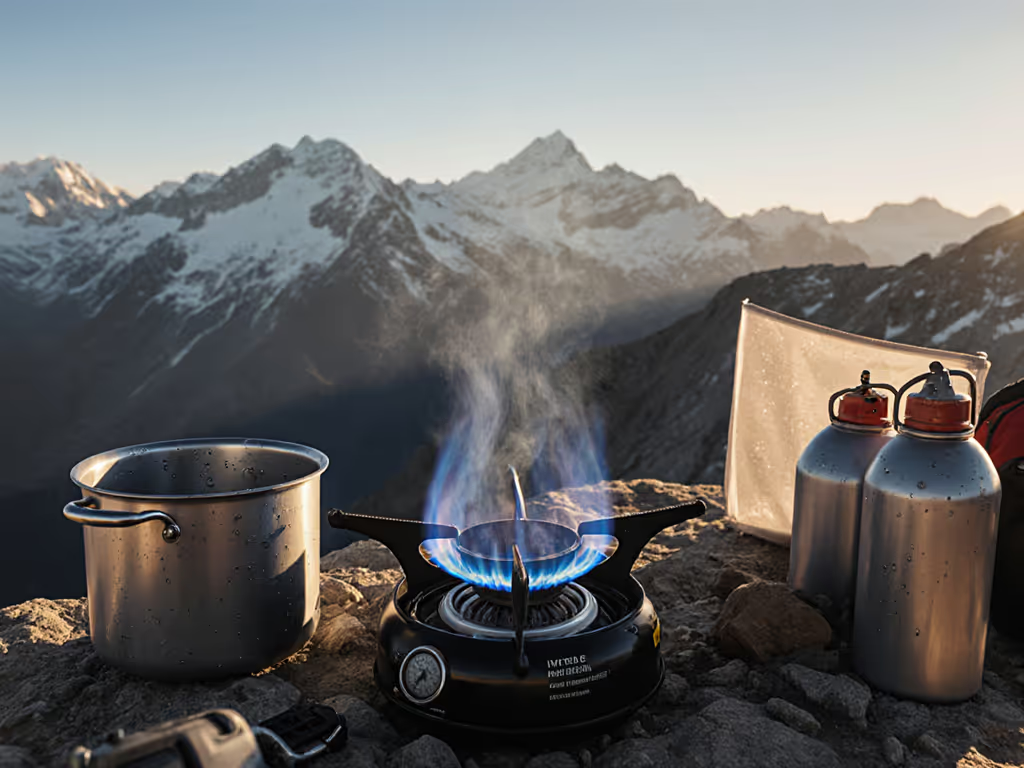
In clean gas flames (propane, butane, isobutane, natural gas):
- Blue flame usually means:
- Good fuel-air mixing
- Hotter core region (roughly 1,400-2,000+ °C in small stoves)
- Minimal glowing soot
- More complete combustion and typically lower CO output
This blue comes from excited molecules and radicals (like CH) emitting specific wavelengths, not from glowing soot. Lab work and burner research consistently link blue, non-luminous flames to higher combustion completeness. For the molecular reasons behind blue versus yellow flames in the field, read our stove fuel chemistry explainer.
But here's the caveat:
- A partially clogged jet can still show a blue flame while starving total output.
- A misaligned pot or aggressive windscreen can cool the flame and increase CO without a dramatic color change.
- In very bright daylight, subtle yellow tips can be hard to see.
So: blue flame is necessary but not sufficient as a guarantee of efficiency. Treat it as one indicator, not the only one.
Cold punishes mistakes; redundancy and priming keep kitchens alive.
Back that visual indicator with fuel math, timing boils, and listening for changes in sound.
2. Why does my stove flame turn yellow or orange?
Yellow/orange is your stove complaining. The reasons fall into two main categories.
A. Glowing soot particles
On many stoves, especially when burning white gas or when a canister stove is choked of air, incomplete combustion produces tiny carbon particles. These get hot and glow like miniature metal filaments:
- They emit broad-spectrum "blackbody" light.
- To your eye, that shows up as yellow-orange.
Typical causes outdoors:
- Poor air supply (blocked air holes, tight windscreen around a canister, stove buried in a snow pit without airflow)
- Dirty jet or generator restricting fuel spray pattern
- Cold fuel causing partial vaporization and unstable mixing
Yellow flame from soot is a combustion completeness problem and often correlates with higher CO production and wasted fuel.
B. Contaminants and metal salts
Sometimes color has nothing to do with efficiency:
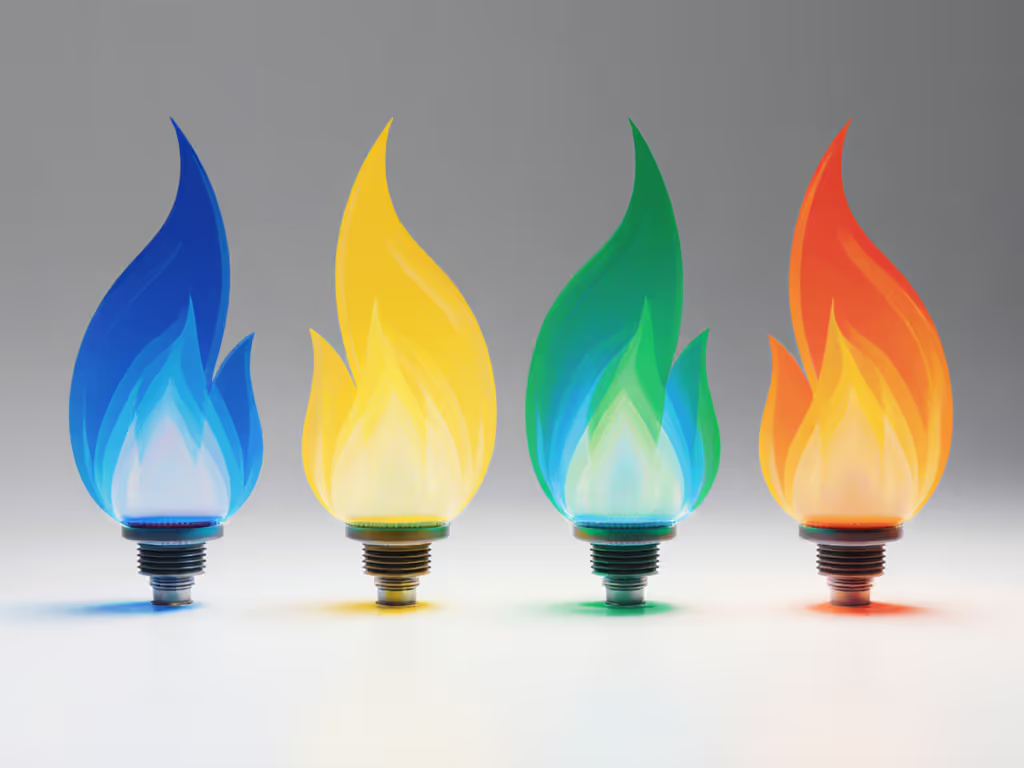
- Sodium contamination (food spills, salt, dust) gives a strong yellow.
- Copper traces (brass dust, coins, treated wood) can give green/blue flashes.
Chemistry educators use this effect deliberately in flame tests to identify elements. On your camp stove, it just means something non-fuel is burning.
Field rule:
- If your flame was blue and suddenly goes yellow after a pasta spill, wipe/clean the burner and try again before assuming a stove fault.
3. What are "optimal flame characteristics" for camp stoves?
Think beyond color. Optimal flame characteristics for most gas and white gas stoves:
- Color:
- Predominantly blue with short, defined cones
- Tiny yellow tips acceptable on white gas during warm-up only
- Shape:
- Stable, symmetrical pattern
- No long lazy yellow tongues licking up pot sides
- Sound:
- Consistent hiss/roar that does not pulse or "breathe"
- Behavior under load:
- When you place a pot, flame pattern stays consistent instead of wrapping wildly around the sides
If you're tuning or troubleshooting, this is the target picture.
4. How does cold, wind, and altitude affect flame color?
This is where most winter failures begin.
Cold
- Canister stoves: As temperature drops below ~0 °C, vapor pressure falls. At -10 to -20 °C, canisters can barely feed fuel. The flame may:
- Shrink and sputter while staying blue
- Show intermittent yellowing as mixing destabilizes
- White gas stoves: Cold fuel and cold metal mean a longer preheat. If you rush it:
- You get a large yellow priming flame that sends liquid fuel, not vapor, into the burner.
Respect preheat time. That's your main control over whether white gas burns blue and efficient or yellow and dirty.
Keep canisters and fuel bottles inside clothing or insulated cozies before use to stabilize performance.
Wind
Wind strips heat and disrupts mixing:
- Lean, gusty flames can lift off the burner, sometimes staying mostly blue but losing effectiveness.
- If wind reintroduces exhaust into the intake area, you can get yellowing and extra CO even with a "bluish" look.
Use windscreens appropriate to your stove type and always maintain clearances recommended by the manufacturer. Get step-by-step setup tips and safe clearances in our windscreen efficiency guide. With upright canisters, never wrap a tight foil windscreen around the canister.
Altitude
Less dense air means less oxygen per volume:
- Some burners show slightly larger, softer flames, sometimes with subtle yellow tips.
- You may need to run lower settings to maintain clean combustion.
Altitude doesn't magically make flames blue or yellow; it shifts how your burner design behaves. Test your specific stove at altitude before relying on it for big groups. If you're planning to climb high, start with the high-altitude stove physics primer.
5. What flame color should I expect from white gas vs canister stoves in winter?
White gas (liquid fuel) stoves
- Priming phase:
- Expect a low, controlled yellow flame while you heat the generator.
- If the flame is tall, roaring, or sooty, you're over-fueling.
- Running phase (after preheat):
- Goal is a mostly blue flame with only minimal yellow at the very tips, especially at moderate throttle.
Risk note: Never prime near soft goods (sleeping bags, tent walls, down jackets). Perform priming on firm, cleared ground or a stable metal surface. No cooking or priming in enclosed spaces; vestibules and vehicles are CO traps.
Canister stoves
- Normal operation:
- Correctly functioning burners fed by propane/isobutane should show blue, non-luminous flames.
- Yellowing means:
- Contamination on the burner head, or
- Poor air mixing (blocked ports, excessive windscreen), or
- Extremely low pressure/cold causing unstable vaporization.
If an upright canister stove shows persistent yellow flame in calm conditions with a clean head, that's a no-go for winter objectives. Service or replace before you depend on it.
(Note: I do not recommend alcohol stoves for winter objectives; their flame color and output characteristics are a poor match for cold, snow-melting missions.)
6. Can I use flame color as a precise temperature gauge or fuel planner?
No. You can use it as a qualitative check, not as a thermometer or fuel calculator.
Laboratory work places blue, well-mixed flames in the ~1,400-2,000+ °C range, and yellow/orange luminous zones cooler than that. But on your trip:
- Pot shape, distance from burner, and wind alter effective heat transfer dramatically.
- A slightly yellow flame under a tight, efficient pot can still boil faster than a perfect blue flame under a bad pot in wind.
Where flame color does help your fuel plan:
- If your stove suddenly shifts from crisp blue to lazy yellow while everything else is constant, your effective efficiency just dropped:
- Expect slower boils
- Expect higher fuel consumption per liter of water
That's your cue to:
- Clean the jet and burner head
- Check for ice/snow blocking air inlets
- Reassess windscreens and pot height
Track burn times at home in calm conditions to establish a baseline. In the field, when times stretch and the flame looks dirtier, consider that your reserve margin is shrinking faster than your spreadsheet predicted.
7. When is flame color a safety red flag instead of a tuning clue?
There are times when you stop adjusting and simply shut down.
Immediate shutoff and diagnose if:
- Flame changes color and shape suddenly (e.g., blue ring to large, lifting yellow fireball)
- Flame appears at the pump, valve, or hose rather than at the burner
- You hear a new roaring or popping sound along the fuel line
- The stove keeps burning weak yellow even at very low settings with clear air access
These can indicate fuel leaks, over-priming, or structural damage.
CO risk flags (even with a blue flame): Learn how to prevent and detect buildup with our camp stove carbon monoxide safety guide.
- Flame wraps up the pot sides in a tight skirting band
- Stove is run in a partially enclosed area (tent, vestibule, vehicle)
Color doesn't show CO. Your mitigation is strict technique:
- Always cook with substantial ventilation, even in storms.
- Keep heads and sleeping areas higher than and away from the stove.
- When in doubt, move the kitchen to a more open but wind-managed spot.
I've watched another team lose hours fighting a frozen, underperforming system while their yellowing flame whispered that efficiency and safety were both slipping. Our kitchen stayed on plan because we preheated correctly, shielded from wind, and kept fuel bottles warm under layers.
Actionable Next Step: Build Your Personal Flame Baseline
Use this framework before your next serious trip, especially winter or high-altitude routes:
- Bench test at home (or in the yard):
- Run each stove on its intended fuel.
- Note flame color, shape, and sound at low, medium, and high settings.
- Time a standard boil (e.g., 1 L) with your actual pot.
- Deliberately disturb the system:
- Slightly block air inlets (without creating a hazard) and note how color changes.
- Simulate wind with a fan and watch flame behavior.
- Cold test:
- Chill fuel (in the fridge or outside on a cold day) and repeat.
- Observe how color and output shift.
- Log your results:
- Record photos of "normal blue" vs "problem yellow/orange" for each stove.
- Pair those images with notes on boil times and conditions.
- Set go/no-go criteria:
- Decide in advance: "If I see X behavior/color, I shut down, clean, or retire the stove."
Respect preheat time, demand clean blue flames in steady operation, and treat every color change as usable data. Done consistently, this small discipline turns your flame from a mystery into a reliable instrument, and keeps your winter kitchen alive when conditions stop forgiving mistakes.
Related Articles