
Stove Fuel Chemistry: Why Cold and Altitude Disrupt Burns
By Ingrid Sørensen • 9th Jan

Mastering fuel combustion chemistry isn't just textbook stuff, it's how we keep stove fuel science working when temperatures plunge or mountains thin the air. As a car-camping kitchen specialist, I've seen how a failed simmer or sputtering flame can unravel mealtime morale fast. That pancake promise I made on a blustery coast? It held because I respected how hydrocarbons and oxygen interact under stress. Let's unpack why your stove struggles in cold or at altitude, and how to fix it with logistics, not luck.
The Combustion Chain Reaction: Why Your Stove Lives or Dies
Combustion isn't magic, it's a precise chemical handshake between fuel vapor and oxygen. For common backpacking fuels like propane or isobutane, the reaction looks like this:
C₃H₈ (propane) + 5O₂ → 3CO₂ + 4H₂O + Heat
This seems simple, but three critical phases must align perfectly:
- Vaporization: Liquid fuel must evaporate into gas (governed by fuel vaporization principles)
- Mixing: Fuel gas and oxygen must blend at optimal ratios
- Ignition: Heat must trigger the hydrocarbon breakdown processes without quenching
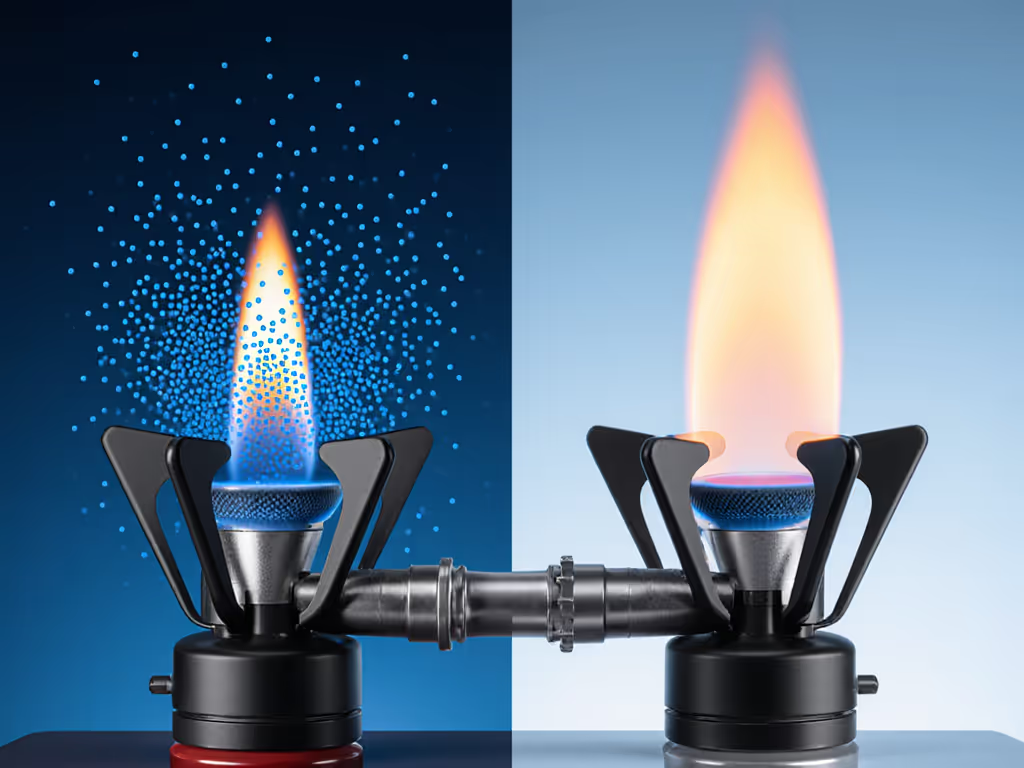
Most stove failures happen when one phase collapses. Cold sabotages vaporization. Altitude cripples mixing. Wind disrupts ignition. Your burner isn't broken, it's fighting physics.
How Cold Temperatures Break the Chain
At 40°F (4°C), standard canister stoves still work. Get proven canister-in-cold strategies to keep burns stable when temperatures drop. But below freezing? Physics fights back:
- Vapor pressure crash: Liquid propane/isobutane can't evaporate fast enough. Fuel pools instead of vaporizing.
- Oxygen interaction science fails: Cold air is denser but less reactive. Molecular motion slows, delaying the fire-starting electron exchange.
- Regulator freeze: Moisture in air freezes inside regulators (a fact confirmed by Coleman's field tests), choking gas flow.
Real-world impact: Your stove burps liquid fuel onto the burner. Instead of a blue flame, you get yellow, sooty flare-ups that scorch food. At 20°F (-7°C), boil times can double, even with a functional regulator. I've watched hungry kids' faces fall as "5-minute oatmeal" stretches toward 15.
Why Altitude Leaves Your Stove Gasping
High-country cooking isn't just about thinner air, it's about oxygen starvation. At 10,000 feet, atmospheric pressure drops 30%. This means:
- Less oxygen per pump stroke (critical for liquid-fuel stoves)
- Lower flame temperature chemistry (reducing heat transfer efficiency by 20-40%)
- Extended preheating times as hydrocarbon breakdown processes slow
Here's the math: To burn 1 gram of propane cleanly, you need 3.6 grams of oxygen. See our high-altitude stove tests for boil times and flame stability above 10,000 feet. At sea level, air delivers 0.23g O₂ per gram. At 10,000 feet? Only 0.16g O₂ per gram. Your stove isn't weak, it's oxygen-deprived. Extended boils waste fuel chasing inefficient combustion, turning that "1-can-for-3-days" promise into a cold campsite crisis.
Practical Fixes: Data-Driven Stability for Real Trips
Forget lab-test claims. Here's how to armor your kitchen against cold and altitude using inclusive menu notes, timelines and prep order, and plain-language safety reminders.
Cold-Weather Combat Protocol
| Step | Action | Why It Works |
|---|---|---|
| Pre-heat | Rest canister in sleeping bag 10 mins pre-cook | Boosts vapor pressure by 15-20 PSI |
| Invert | Use remote canisters inverted (not integrated stoves!) | Draws liquid fuel directly, bypassing vaporization limits |
| Wind buffer | 6"-high windscreen + heat-reflective ground pad | Shields flame without trapping heat (illegal with upright canisters) |
| Fuel swap | Mix in winter-blend fuel (70% isobutane/30% propane) | Lowers vaporization threshold to -22°F (-30°C) |
Inclusive menu note: Swap porridge for pre-hydrated steel-cut oats. They reheat 50% faster in marginal conditions, critical for pre-dawn ski tours when fuel efficiency is life.
Altitude Adjustment Checklist
- Pre-boil priority: Always boil water before simmering. Thin air makes stable low flames nearly impossible.
- Wind management: Use terrain (boulders, snowbanks) over fabric screens. Plain-language safety reminder: Never enclose propane systems (CO buildup risk jumps 300% above 8,000 feet).
- Pot support: Wider bases = even heat. Narrow pot supports create hot spots that scorch once oxygen thins.
- Fuel buffer: Add 25% extra fuel. That "45-min boil time" at sea level becomes 60+ mins at 12,000 feet.
Timelines for Crisis Scenarios
When stove sputters below 25°F (-4°C):
- 0-2 mins: Check windscreen placement (must have 2" clearance)
- 2-4 mins: Invert canister (if remote) or warm with hands
- 4+ mins: Switch to white gas stove - this is why smart kits carry dual systems If you're weighing systems, start with our canister vs liquid fuel guide for cold and altitude trade-offs.
At 10,000+ feet with wind:
- Boil time = 1.8x sea level estimate
- Critical: Strain snow before melting, impurities lower water's boiling point, wasting fuel
Final Verdict: Stability Is the Ultimate Fuel Saver
Understanding flame temperature chemistry isn't academic, it's how we turn panicked trips into joyful ones. That coastal pancake moment taught me: When the hydrocarbon breakdown processes align with smart logistics, everyone eats warm. Families stay fed. Diets get respected. Morale stays high.
Seat people before you light, then light with confidence. Cold and altitude will always test your stove. But with physics on your side, you'll never test your campers' patience. Pack for oxygen scarcity, not marketing promises. Because family-proof kitchens: stable simmer, quick boils, zero drama.
Inclusive menu note: Lactose-free curry? Simmer 10 mins longer at altitude to ensure full flavor melding, thin air cools liquids faster. Plan your prep order so this happens while setting up camp.
Related Articles