How Humidity Affects Camping Stove Combustion
By Liam Chen • 6th May
Introduction
When you're planning a monsoon-season cooking setup or confronting jungle camping gear challenges, humidity's impact on camping stoves becomes your hidden variable. Most stove performance specs are logged in lab conditions (benign air pressure, controlled temperatures, zero wind). But humidity and stove combustion tell a different story. For controlled test data comparing dry versus saturated air, see our humidity impact on tropical stove performance. Water vapor infiltrates flame chemistry, fuel pressure curves, and heat transfer efficiency. This article digs into the mechanics of how moisture-laden air reshapes stove performance, and why a stove that boils water brilliantly in your driveway can limp in humid lowlands.
FAQ: Humidity Impact on Camping Stoves
What does humidity actually do to stove combustion?
Combustion is a mass-ratio game: hydrocarbon fuel + oxygen = heat + water vapor + CO2. When ambient air is already moisture-saturated, you're fighting thermodynamic reality. Humid air is less dense than dry air. At 80% relative humidity and 20°C (68°F), air density drops 1-2% compared to dry conditions. For your stove's flame, this means the fuel-to-oxygen ratio skews leaner.
In practical terms: you see a shorter, quieter flame. Heat output drops measurably. A stove delivering 10,000 BTU/h in dry alpine air might produce 9,400-9,700 BTU/h in humid subtropical conditions. That variance matters when trying to simmer soup in 40 mph gusts and 95% humidity while a squall approaches.
Humidity also delays ignition. Moisture on fuel-jet surfaces increases resistance to spark discharge. Piezo igniters become unreliable, stuttering "click-click-click" before light-off. Liquid-fuel stoves require longer priming phases in soggy conditions.
How does condensation affect fuel efficiency?
Canister systems: Propane and butane canisters breathe thermally. During the day, heat expands vapor pressure; at night, cooling contracts it. In humid environments with large diurnal swings, moisture-laden air drawn back into a cooling canister can deposit water on internal valve seats. Learn how pressure regulators stabilize stove performance and what that means in wet, heat-cycling conditions. The symptom: pressure drop after overnight rest or a sluggish valve that won't fully open until you warm the canister by hand.
Cookware heat exchange: Humid air is a slightly better thermal conductor than dry air. A simple-walled aluminum pot loses 2-4% more radiant heat. Compound this over a three-week monsoon trek with daily cooking in 85°F, 90% humidity, and your fuel budget tightens visibly.
More practically: morning dew on your pot slows heat up. A quart of water at 55°F (13°C) with condensation on the outside requires an extra 30-60 seconds to reach boil compared to a dry setup. That lag compounds daily.
Why does humidity change stove performance more dramatically at altitude?
Altitude and humidity interact dangerously. Air density drops with elevation; oxygen availability diminishes. Add high humidity at moderate altitude (8,000-10,000 feet / 2,400-3,000 m), and your stove chokes harder than at sea level.
At 10,000 feet, atmospheric pressure is 70% of sea level. Oxygen availability is 30% lower. If you climb into a monsoon layer (wet air lifted from warm lowlands), you face thin air and moisture competing for space.
The flame shrinks and yellows. Heat output drops 15-25% below sea level readings. Simmer becomes nearly impossible. Water boils at 202°F (94°C) at 10,000 feet instead of 212°F (100°C) at sea level.
This is why inverted-canister systems and wind protection become nonnegotiable for high-altitude, humid operations. For gear that holds flame in thin, moist air, see our field-tested mountain stove comparison. A shoulder-season traverse pinned us at 11,000 feet with sleet and 45 mph gusts; most party stoves flickered and stalled. The rig that performed (a hard screen, 0.75 mm jet, inverted canister) had been spreadsheet-modeled against exactly those conditions. It held a steady simmer and saved our fuel plan. That was the night I stopped believing marketing boil times without wind.
Wind doesn't care about spec sheets; we test where it howls.
What's the link between monsoon season cooking and stove reliability?
Monsoon season cooking stresses stoves under high humidity (75-95%), rapid temperature swings (70°F dawn, 95°F midday, 72°F dusk), and frequent thunderstorms that drive down pressure.
Humidity during monsoon is relentless. Thermal cycling is severe. Morning cold contracts canisters; afternoon heat expands them. If valve seats have micro-moisture (likely after a night in 90% humidity), that cycle pushes water into fuel lines or regulators.
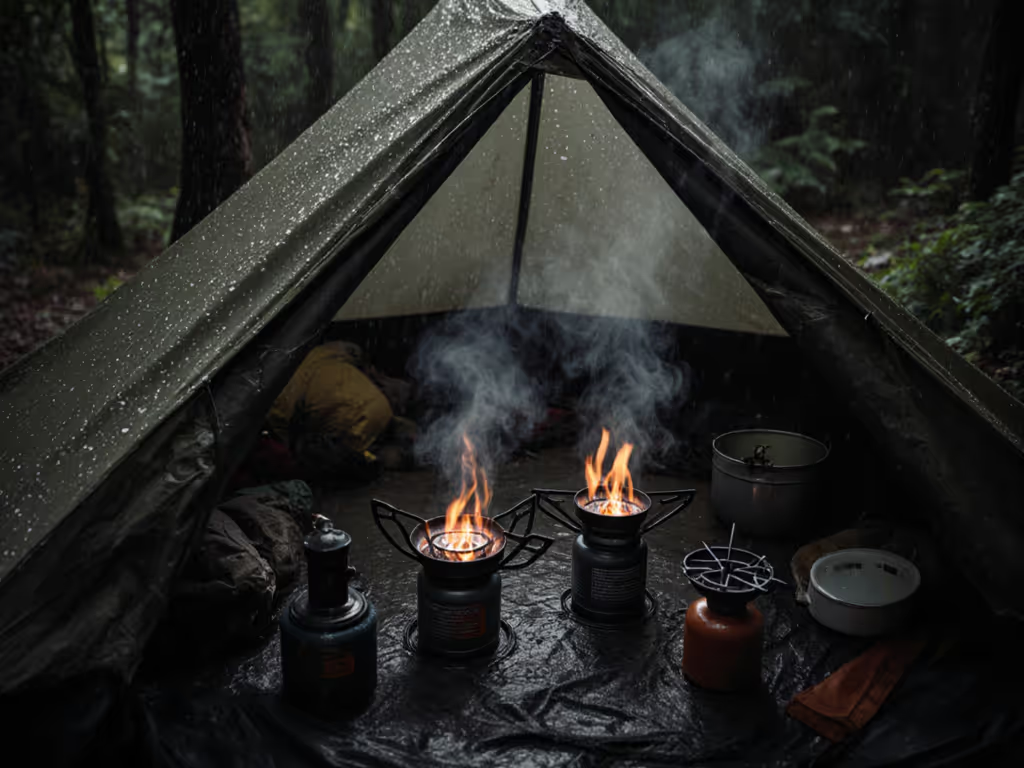
Cook-shelter ventilation is critical. In monsoon regions, you cook in vestibules or tarps to dodge rain. That enclosed space traps humidity and carbon monoxide. A stove running in a poorly ventilated shelter produces lethal CO levels in under 30 minutes. Review essential camp stove CO safety practices before cooking under a tarp or vestibule. Ensure cross-ventilation or cook outside despite the rain.
For jungle camping gear, choose stoves with straightforward ignition and simple fuel paths. Alcohol or white-gas burners in humid tropics are often more reliable than canister systems because they're less sensitive to thermal cycling and valve performance. If you’re weighing fuel types for wet climates, start with our canister vs liquid fuel guide.
How do I plan fuel consumption when humidity changes stove efficiency?
Fuel planning in humid conditions requires a margin-based approach. Don't rely on manufacturer boil times; use real field data, your own logs from past trips in similar conditions.
Start with baseline: measure your stove's water-boil time in the actual conditions you'll face. Record ambient temperature, humidity, wind, altitude, fuel type, canister age, pot type, time to rolling boil, and fuel consumed.
From that, calculate output and adjust for your actual meals. If you planned 8 oz of fuel per person per day (typical for three meals on a dry trip), add 15-20% for humid conditions: 9.5-10 oz per person per day. Carry a small spare canister as margin, not contingency.
Wind eats BTUs, and humidity delays recovery. If your test showed a 12-minute boil in calm, humid conditions, expect 18-22 minutes in gusty weather. That compounds daily if cooking in afternoon monsoon squalls.
Best practices for camping stoves in high humidity environments
- Fuel storage: Keep canisters cool and shaded, elevated on a platform to avoid dew-laden ground contact.
- Ventilation: Always cook outside or in a well cross-ventilated space. Never cook inside a closed tent.
- Seal integrity: Check valve seats and regulator connections. In humid regions, wipe seals with a dry cloth and light silicone lubricant.
- Ignition backup: Carry both piezo and waterproof matches. Humidity kills piezo reliability.
- Heat management: Use windscreens on gusty days, but ensure they don't trap heat or obstruct airflow.
- Simmer control: Practice on a warm, breezy day before a monsoon trip. Humidity, thin flame, and pressure drop make simmering tricky.
Conclusion: Route-Specific System Tuning
Humidity's impact on camping stoves isn't one size fits all; it's a variable you modulate by route, season, and forecast. A stove system for autumn Colorado car camping won't perform identically during a monsoon trek in Central America. The best camp cooking stove for your trip is one you've tested and logged in conditions close to what you'll face.
Build a simple field log: date, location, altitude, temperature, humidity, wind, fuel type, meal, boil time, canister weight. Over a few trips, you'll see your stove's real signature (how it behaves at 5,000 feet vs. 10,000 feet, dry vs. saturated air, calm vs. gusty).
For deeper exploration, dive into manufacturer specs (particularly pressure curves at various temperatures), search for peer reviews where users log real-world conditions, and consider a lightweight data logger to measure canister temperature during test runs. The more you measure, the less you guess, and the faster your team eats dinner when weather turns sideways.
Related Articles