Global Camping Stove Regulations Clarified
By Amina Al-Khalil • 2nd Dec

As responsible outdoorspeople increasingly plan international adventures, understanding international camping stove regulations has become critical to trip planning. For stove models vetted for fuel availability and cross-border compliance, see our globally compatible picks. Whether you're hiking Norwegian fjords, backpacking through New Zealand's backcountry, or simply wondering if your current camping stove meets global stove compliance standards for your next trip, this guide cuts through regulatory confusion with actionable data. I have faced the frustration of nearly missing flights with improperly prepared stoves and seen groups turned away from campsites due to non-compliant equipment. When regulations are clear upfront, you can fix it, fuel it smart, pack out less, every trip.
Understanding Regional Regulatory Landscapes
Europe's Evolving Framework
European regulations have tightened significantly, particularly in the UK where Stage 3 fire restrictions now apply to certain areas. Crucially, all wood-burning stoves introduced after 2022 must meet Ecodesign standards for emissions. Germany has gone further with its 2024 Federal Immission Control Act requiring particulate filters or complete replacement of older models. For travelers, the key takeaway is simple: if your stove lacks a shutoff valve, it likely won't comply in urban European zones. Scotland's Clean Air Plan has similarly restricted solid fuel burning in cities like Edinburgh and Glasgow, with fines for non-compliance reaching £1,000. Always verify local requirements before departure, as council websites typically have English-language advisories.
North American Regulations: More Nuanced Than You Think
Despite rumors, the US has no nationwide wood stove ban, but NFPA 1124 regulations govern solid fuel devices. The critical factor for travelers is understanding that many US national forests implement seasonal fire restrictions that affect stove usage. California's Campfire Permit system allows pressurized gas stoves with shutoff valves (like many canister models) even during Stage 1 restrictions, while liquid fuel stoves require more caution. For a deeper dive into protected-area policies and why shutoff valves matter, read our national park stove rules guide. In Canada, provincial regulations vary significantly, with British Columbia's wildfire restrictions often prohibiting all open flames but permitting certified gas stoves, while Quebec requires specific certifications for any portable stove used in provincial parks.
Southern Hemisphere Considerations
Australia and New Zealand have particularly strict regulations that trip up many international visitors. Australia's National Parks often prohibit alcohol stoves entirely due to safety concerns, while New Zealand's Department of Conservation requires stoves to be "self-contained with a shut-off valve" (effectively banning many integrated canister-top designs). Both countries maintain active stove ban lists that change seasonally based on fire risk. Always check park-specific websites, as regulations can vary between adjacent conservation areas.
Air Travel: Your Stove's Passport Requirements
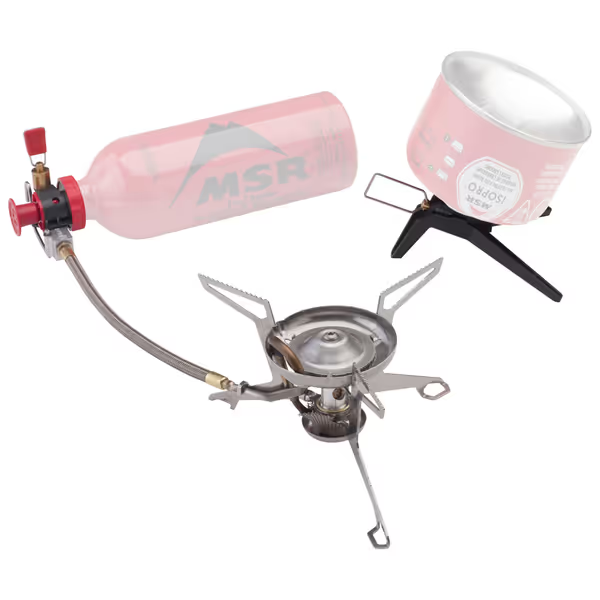
MSR WhisperLite Universal
Versatile hybrid-fuel stove for reliable performance in any condition.
$199.95
Minimum Weight11.2 oz (0.32 kg)
Minimum Weight11.2 oz (0.32 kg)
Pros
Adapts to multiple fuel types (canister, white gas, kerosene, unleaded)
Consistent performance in cold weather & high altitude via liquid feed
Cons
Fuel bottle not included
Customers find this camping stove to be of great quality and versatile, capable of using various fuel types including canisters and white gas. The stove is easy to assemble and use, heats water quickly, and works well in freezing temperatures. They appreciate its lightweight design and suitability for travel and emergency situations, with one customer noting its effectiveness at high altitudes.
Customers find this camping stove to be of great quality and versatile, capable of using various fuel types including canisters and white gas. The stove is easy to assemble and use, heats water quickly, and works well in freezing temperatures. They appreciate its lightweight design and suitability for travel and emergency situations, with one customer noting its effectiveness at high altitudes.
The Universal Rule: Empty = Acceptable
The Transportation Security Administration (TSA) and Civil Aviation Authority (CAA) share one absolute requirement: your stove must be completely purged of fuel and cleaned to remove all vapors. Step-by-step cleaning and field fixes that pass inspections are covered in our camp stove repair guide. As the MSR WhisperLite Universal demonstrates with its field-serviceable design, this is far easier with rebuildable stoves where you can access all fuel pathways. The critical detail many miss? "Empty" means not just drained but thoroughly cleaned with isopropyl alcohol to remove residual vapors (a task complicated by sealed units with inaccessible fuel lines).
Fuel Container Restrictions
International fuel regulations make this clear: never attempt to fly with fuel canisters, even if "empty." Liquid fuel bottles can travel if:
- Completely empty of liquid
- Thoroughly cleaned with isopropyl alcohol
- Left uncapped during travel to prevent vapor buildup
- Stored in a leak-proof secondary container
I've learned through hard experience that airlines rarely accept "mostly empty" claims (once on a trip to Patagonia, I spent an hour meticulously cleaning my fuel bottle only to have it rejected because I'd capped it too soon).
Spare O-rings weigh almost nothing, but forgetting them during field maintenance can turn a simple repair into a camp kitchen emergency.
Navigating Fire Restrictions and Seasonal Bans
Reading the Fine Print on Restrictions
Stage 1 restrictions (common in US Western states June-October) typically allow pressurized gas stoves with shutoff valves but prohibit wood, charcoal, and alcohol stoves. The nuance lies in the wording: "pressurized gas" usually means canister stoves with integrated valves, not liquid fuel systems where you control flow via the pump. Always carry documentation showing your stove meets requirements; many newer models include compliance labels.
Critical Safety Considerations
Recent CPSC recalls highlight why regulations exist, because faulty valve systems or improperly maintained stoves can cause explosions. When maintaining your stove in the field, always:
- Check valve torque specifications (most require 15-20 in/lb)
- Use only manufacturer-approved lubricants on O-rings
- Verify no fuel residue remains before reassembly
Remember that canyon downpour where couscous nearly ruined our trip? That's when proper maintenance and compliance knowledge matters most (not just when rangers check your gear).
Practical Compliance Checklist for International Travelers
Pre-Departure Preparation
- Verify destination-specific regulations via official park/country websites
- Clean stove thoroughly with isopropyl alcohol (3 passes minimum)
- Disassemble critical components to ensure complete drying
- Pack documentation showing shutoff valve compliance
- Bring spare O-rings and gaskets appropriate for your model
Field Maintenance Protocol
When maintaining your stove abroad, follow these torque and seal cautions:
- Fuel line connections: 12-15 in/lb (over-tightening cracks fittings)
- Pump seals: hand-tight plus 1/8 turn only
- Valve stems: 5-7 in/lb (exceeding this damages precision machining)
Waste-reduction tip: Pack a small container of isopropyl alcohol for cleaning (reusable for multiple trips unlike single-use cleaning wipes).
Actionable Next Steps for Your Next Trip
- Verify before you travel: Contact park authorities directly for current restrictions (do not rely on third-party websites)
- Choose serviceable stoves: Prioritize rebuildable models where you can access all components for thorough cleaning If you'll be sourcing fuel internationally, compare performance in our multi-fuel global field test.
- Document compliance: Take photos of your stove's shutoff valve mechanism and specifications
- Pack repair essentials: Include proper tools, spare parts, and cleaning supplies
The most reliable stove isn't necessarily the lightest, it is the one you can maintain and operate within local regulations. As regulations evolve, your ability to adapt becomes as crucial as your navigation skills. Before your next international adventure, dedicate time to regulatory research equal to your route planning. When you understand country-specific stove rules, you transform compliance from a hassle into another element of your carefully tuned outdoor system, where every component, from international fuel regulations to your spare parts kit, works together for trouble-free meals anywhere on the map.
Related Articles