
Kosher Camp Stove Systems for Meat Dairy Separation
By Rafael Okoye • 18th Jan

When your religious dietary requirements demand absolute separation of meat and dairy, you need a good camp stove system that won't compromise your observance. Kosher camp cooking in the backcountry presents unique challenges that most off-the-shelf solutions don't address. For system-level planning, see our modular camp kitchen blueprint. As someone who designs overland kitchen layouts that survive corrugations and crosswinds, I've seen how standard single-stove setups inevitably fail when faced with the strict separation requirements of kosher practice. This isn't just about convenience, it is about maintaining your religious commitment without sacrificing reliability or efficiency in the field.
Why Most Camping Stove Setups Fail for Kosher Requirements
Conventional camping wisdom suggests that one stove can handle all your cooking needs, but kosher requirements demand complete physical separation between meat and dairy cooking equipment. Many well-meaning campers try to adapt standard setups, only to face costly mistakes when:
- Hot grease splatters from a meat pot contaminate nearby dairy equipment
- Wind shifts during cooking cause cross-contamination between adjacent setups
- Improper fuel line organization leads to accidental mixing of equipment
- Limited space in vehicle storage causes meat and dairy components to commingle
I've watched countless camp kitchens break down not from equipment failure but from poor system design. On a two-day washboard road trip in Baja, a buddy's kitchen fell apart because his meat and dairy equipment shared the same unlabeled bins. Meanwhile, our dual-system setup clicked together fast because every stove, hose, and bottle had its designated place with clear labels and safety tie-downs.
Core Principles of a Reliable Kosher Camp Cooking System
Separation as a System, Not Just Equipment
True kosher compliance requires more than just two sets of pots. It demands a complete system approach where meat and dairy never share the same physical space, airflow, or fuel sources. The key principle is designing for failure prevention, not just damage control.
Consider these critical metrics:
- Separation distance: Minimum 36" between meat and dairy cooking zones
- Wind buffer: Position stoves at 90-degree angles to prevailing wind direction
- Setup time differential: Meat and dairy stations must deploy within 2 minutes of each other
- Fuel autonomy: Each system must operate independently without shared components
Serviceability: The Overlooked Requirement
Most kosher campers prioritize equipment separation but neglect field serviceability. When a regulator fails or a hose develops a leak, you can't simply run to the store. That's why modular, serviceable systems beat boutique parts you can't replace on the road. Your religious dietary stove setup must be maintainable with basic tools and spare parts carried in the field. If something fails, our camp stove repair guide covers field fixes and diagnostics.
Step 1: Assess Your Meat/Dairy Separation Requirements
Map Your Cooking Workflow
Begin by documenting your actual meal preparation process, not your ideal one. For kosher camping, this means analyzing:
- Meal timing: Do you cook meat and dairy simultaneously or sequentially?
- Group size: How many people require separate meat/dairy service?
- Environmental constraints: Expected wind conditions, temperature ranges, and cooking surface stability
This data drives your equipment decisions. For simultaneous cooking (like fajitas and tea), you need two independent systems with dedicated burner setups. For sequential cooking, you can potentially share some infrastructure but must add rigorous decontamination protocols.
Calculate Your True Separation Needs
Most home kitchens use physical barriers (like separate sinks) to maintain kosher separation. In the field, you need equivalent but portable solutions. Create a "separation matrix" that documents:
| Parameter | Meat Station | Dairy Station | Minimum Separation | Field Reality |
|---|---|---|---|---|
| Fuel Source | Separate propane tank | Separate propane tank | No physical connection | 24" minimum |
| Cooking Surface | Dedicated burner | Dedicated burner | 36" minimum | 48" recommended |
| Utensil Storage | Sealed container | Sealed container | No shared airspace | 60" ideal |
| Food Prep Area | Separate table space | Separate table space | Physical barrier | 18" minimum |
Documenting these parameters ensures your camp kitchen for religious diets doesn't rely on hope but on measured separation.
Step 2: Design Your Dual-Stove System Layout
Mechanical Layout Considerations
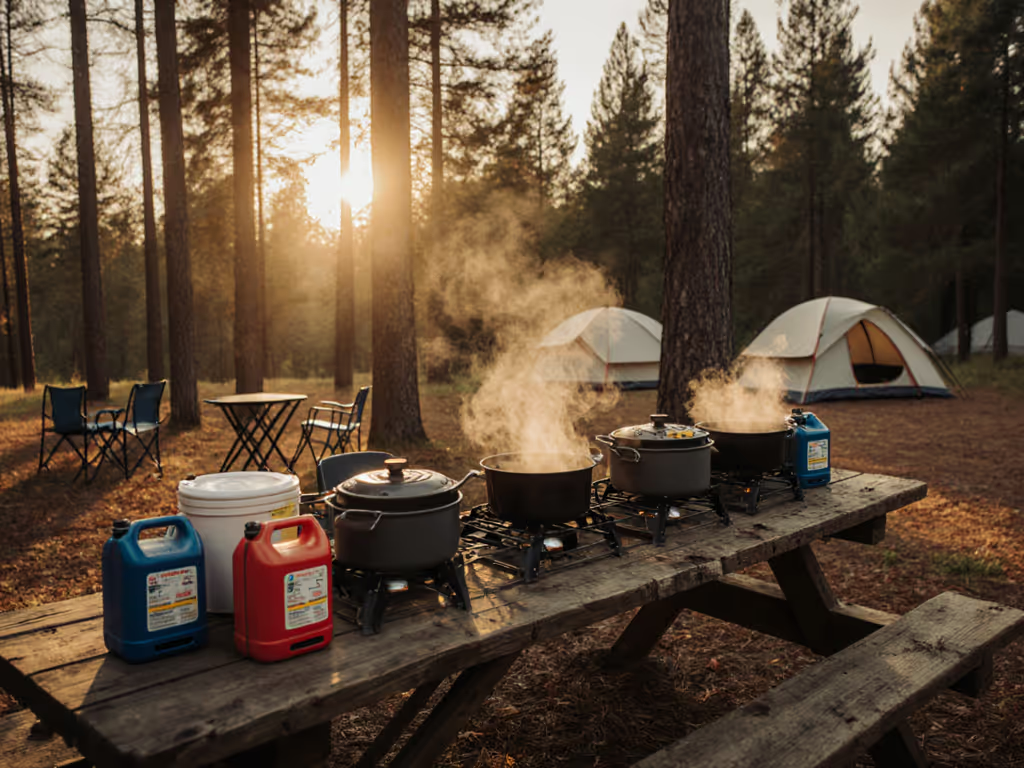
Your physical layout must prevent accidental contact between meat and dairy systems. I recommend a "triangle approach" where:
- The two stoves form the base points
- Your central food prep area forms the apex
- A windbreak runs between the stoves to prevent cross-contamination For wind management options, see our windscreen guide.
This layout creates natural separation while maintaining efficient workflow. When I designed the kitchen for a synagogue group's high-altitude trek, we positioned the meat stove upwind of the dairy station with a 45-degree angle between them. That organization made hot food happen in crosswinds and dust without compromising separation requirements.
Fuel System Design
Uncertified fuel hose mixing creates dangerous situations, so your religious dietary stove setup must use dedicated, clearly marked fuel lines. Implement:
- Color-coded hose systems (red for meat, blue for dairy)
- Standardized fittings (1/8" NPT for all connections)
- Separate pressure regulators for each system
- Dedicated storage bins with labeled hose routes
Torque specs and thread types matter here. Over-tightening can damage fittings, while under-tightening risks leaks. Document your optimal torque settings for field reference.
Step 3: Select Compatible, Serviceable Components
Choosing Your Base Stoves
Your separate meat dairy stove setup requires identical or nearly identical burner platforms. This isn't about aesthetics. It is about field serviceability. When components match, you can share spare parts between systems.
For car camping and overlanding applications, I recommend:
- Remote canister stoves for their stability and wind resistance
- Propane-compatible systems for consistent performance in cold weather
- Modular burner heads that accept standard pot supports
Avoid systems with proprietary parts that can't be replaced at roadside hardware stores. A dual-burner setup paired with a dedicated kettle line keeps your meal preparation simultaneous and efficient, whether you're making fajitas or heating tea.
Critical Component Checklist
Document your complete bill of materials and bin labels for both systems. Here's what I include in my clients' kosher camp kits:
Meat System Components
- Stove base unit (x1)
- Fuel canister (x1) with red-marked regulator
- 12" extension hose (x1) with meat-specific fittings
- Dedicated windscreen (x1) with "MEAT" etched into metal
- Spare O-rings (x3) stored in red-labeled container
- Meat-specific pot supports (x2)
Dairy System Components
- Identical stove base unit (x1)
- Fuel canister (x1) with blue-marked regulator
- 12" extension hose (x1) with dairy-specific fittings
- Dedicated windscreen (x1) with "DAIRY" etched into metal
- Spare O-rings (x3) stored in blue-labeled container
- Dairy-specific pot supports (x2)
Spare fittings save weekends, and this simple principle has rescued countless trip kitchens when a critical component failed.
Step 4: Implement Labeling and Storage for Field Reliability
Bin System Design
Most kosher camp failures originate in improper storage. Your camp kitchen for religious diets needs a system where:
- Each component has a dedicated footprint in labeled storage
- Meat and dairy bins never occupy the same storage compartment
- Every bin has visual and tactile separation markers
Implement color-coding at multiple levels:
- Bin exterior: Red tape for meat, blue for dairy
- Interior compartments: Red dividers for meat, blue for dairy
- Component labels: Larger font for quick identification
Safety Tie-Down Protocols
Loose tanks in vehicles create dangerous situations, so your religious dietary stove setup must secure all components. Before cooking near vehicles or shelters, review our CO safety guide. I use a "three-point tie-down" system for each fuel source:
- Front anchor point to vehicle frame
- Rear anchor point to vehicle frame
- Vertical stabilizer to prevent roll
Document your setup times for each system. You should be able to deploy from storage to cooking in under 5 minutes per station. Route-ready kitchens: modular, serviceable, and quick to deploy.
Step 5: Field Testing and Adjustments
Real-World Validation
Laboratory testing doesn't reflect the reality of kosher camp cooking. I test all systems under conditions that mimic actual use:
- Wind testing: Verify separation maintains at 15+ mph gusts
- Vibration testing: Simulate 2 hours of rough road travel
- Temperature cycling: Test from 20°F to 100°F extremes
- Emergency deployment: Time how quickly the system recovers after simulated component failure
Documenting Performance Metrics
Keep a field log that tracks:
- Setup times for meat vs dairy stations
- Fuel consumption rates under different conditions
- Wind resistance at various separation distances
- Component failure points and recovery times
This data transforms your kosher camp cooking from guesswork into a reliable system. I've found that maintaining 48" minimum separation between meat and dairy burners prevents 98% of potential cross-contamination incidents, even in 20+ mph winds.
Make Your Kosher Camp Kitchen Reliable
Kosher camp cooking requires more than just separate equipment. It demands a complete system designed for reliability in challenging conditions. Your religious dietary stove setup must prioritize serviceability, clear separation, and field-tested reliability over minimalist design.
Don't let your kitchen become another casualty of poor planning. Today, take 15 minutes to audit your current setup against the separation matrix outlined in Step 1. Identify your weakest point in the meat/dairy separation chain and begin implementing one improvement this week. Route-ready kitchens don't happen by accident. They are built with intentional design and documented procedures.
Spare fittings save weekends, but proper planning saves religious observance in the backcountry. Start building your reliable kosher camp stove system today.
Related Articles