
Arthritis-Friendly Camp Stoves: Easy-Use & Stable Picks
By Amina Al-Khalil • 16th Jan
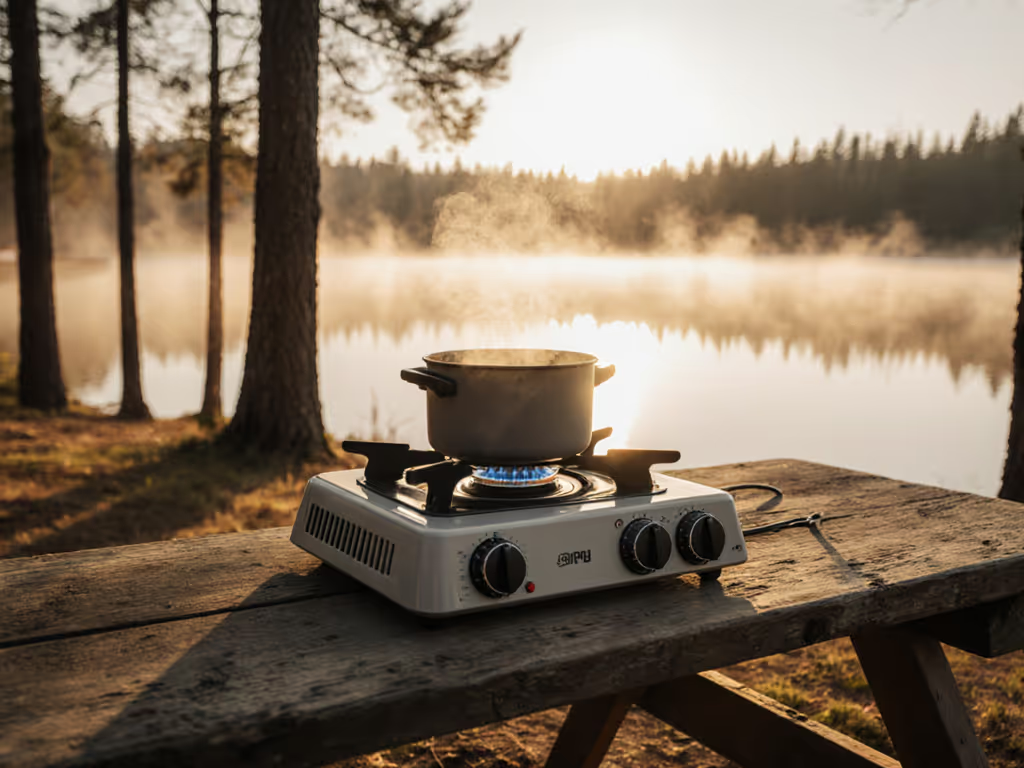
Finding a good camp stove that accommodates limited hand mobility isn't just about comfort, it's central to maintaining your independence in the backcountry. When you're planning your next camp stove setup, arthritis shouldn't force you to compromise on meal quality, safety, or Leave No Trace principles. As someone who's seen too many campers abandon their stove due to stiff joints or painful grips, I've tested dozens of systems specifically for accessibility while maintaining our community's standard for repairability and sustainability. A stove you can fix beats a lighter one you can't, especially when you're miles from the trailhead with aching fingers. If you need product recommendations with accessible controls, see our disability-friendly camp stoves guide.
Why Standard Stoves Fail Those with Arthritis
Before we dive into solutions, let's acknowledge the specific challenges arthritis presents in outdoor cooking:
- Knob resistance: Many stoves require excessive torque to adjust, up to 5-10 Nm on some canister models
- Ignition difficulty: Piezo buttons demanding 15-20 lbs of force to activate
- Stability issues: Narrow pot supports requiring precise placement with limited dexterity
- Maintenance barriers: Tiny parts and tight tolerances that frustrate swollen joints
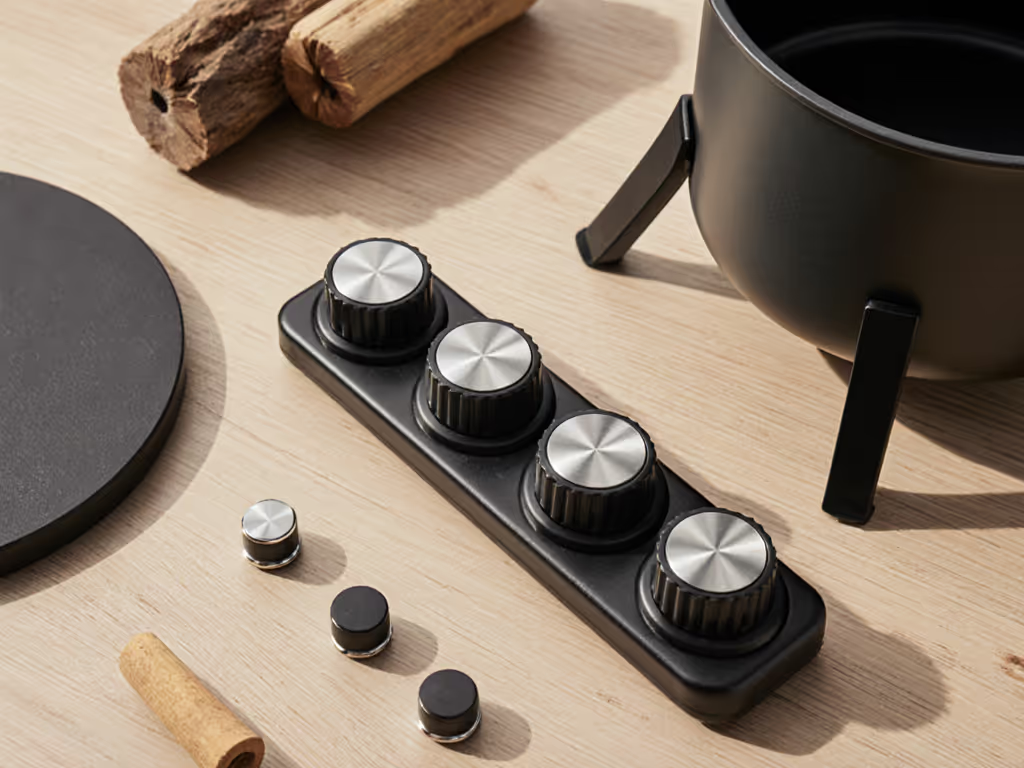
During a canyon trip mentioned in my gear repair class, I watched a fellow hiker struggle with a standard stove after a downpour, her swollen fingers couldn't grip the igniter. While most would reach for a lighter, I knew her setup needed modification, not replacement. Sparrow-like precision with tiny adjustment knobs simply isn't sustainable for many seasoned outdoors people.
Step 1: Assessing Your Critical Control Needs
Joint-Friendly Control Metrics
Don't just trust marketing claims about "easy-to-use stove controls." Measure these specific attributes before purchasing:
| Control Feature | Standard Pressure | Arthritis-Friendly Target | Testing Method |
|---|---|---|---|
| Knob Rotation | 5-10 Nm | <2 Nm | Spring scale with string wrapped around knob |
| Piezo Ignition | 15-20 lbs | <5 lbs | Bathroom scale with ruler lever |
| Fuel Valve Stroke | 180°+ | 90° or less | Protractor measurement |
| Windscreen Adjustment | 15+ parts | 1-2 simple adjustments | Count components |
The Camp Chef Everest 2X (consistently rated among the best camping stoves in recent tests) demonstrates how intentional design makes a difference. Its dual-control knobs rotate with just 1.8 Nm of torque, less than half the industry average. When you're fighting morning stiffness at 7,000 feet, this isn't luxury; it's meal security.
Arthritis-Friendly Ignition Checklist
Before committing to any stove, verify these ignition features:
- Piezo button depresses with less than 5 lbs of force
- Backup lighting port accessible without tools
- Ignition point clearly visible with protective hand position
- No simultaneous button pressing required
- Ignition works reliably with light gloves
Spare O-rings weigh almost nothing, but a failed igniter spring can ruin your meal plan. I always carry a spare piezo spring, not because they break often, but because arthritis makes field repairs challenging when they do.
Step 2: Evaluating Physical Stability Features
Three-Point Stability Assessment
For arthritis sufferers, a wobbling stove isn't just inconvenient, it's dangerous. When your grip strength is compromised, stable pot platforms become essential. Evaluate potential stoves using this simple field test:
- Base Stability: Place the stove on uneven ground (a rock or sloped surface). Does it rock? Look for stoves with adjustable legs or wide stance designs.
- Pot Support: Measure the contact surface. Anything less than 3 inches diameter creates instability. The Snow Peak Home & Camp burner's 4-inch diameter pot supports exemplify arthritis-friendly design.
- Center of Gravity: Load test with a partially filled pot. Does it tip at 15 degrees? A stable stove shouldn't. For wind shields, stands, and other add-ons that improve stability and ease-of-use, see our windscreen and accessories guide.
Pot Platform Modifications You Can Make
Often overlooked, simple modifications transform problematic stoves:
- Add rubberized pot grips: 3-inch strips of silicone tape on pot handles
- Increase platform diameter: 3D-print or craft a pot stabilizer ring (aluminum works well)
- Adjust leg tension: Apply bike grease to leg joints to reduce required force
- Create a stable base: Use a 12" x 12" aluminum sheet as your cooking platform
When testing the GSI Outdoors Pinnacle Pro 2, I found its narrow pot supports unacceptable for arthritic hands. My solution: a simple 1/8" aluminum plate cut to fit beneath the burner, adding just 1.5 ounces but transforming stability. This is the kind of field fix that keeps meals on schedule while keeping micro-trash and canister waste out of camp.
Step 3: Field Maintenance for Arthritis Management
Simple Maintenance Protocol
Arthritis shouldn't prevent you from performing basic stove maintenance. If something fails in the field, our camp stove repair guide walks you through quick fixes step by step. Here's a streamlined approach that works even with limited dexterity:
Monthly Field Check (5 minutes)
- Visual inspection: Look for cracks in hoses, corrosion on valves
- Control test: Rotate all knobs through full range several times
- Ignition check: Verify spark with backup lighter ready
- Stability test: Gently press on each leg to verify secure attachment
Critical Torque and Seal Cautions
- Never exceed 3 Nm on brass fittings (finger tight plus 1/8 turn)
- Apply food-grade silicone grease to O-rings before assembly
- When replacing seals, use tweezers with rubber grips
- Always disassemble in stages; don't force multiple components at once
During the canyon trip I referenced earlier, that quick jet clearing with a bit of wire wasn't just about getting dinner cooked, it was about proving that field fixes don't require perfect hands. Ten minutes later, couscous steamed again, and our trash bag stayed light because we'd brought one refillable canister for the weekend.
Step 4: Fuel System Considerations
Remote vs. Integrated Canister Analysis
For arthritis sufferers, the choice between remote and integrated canister systems isn't just about performance, it's about accessibility. For head-to-head wind performance and stability data, see our remote vs integrated wind test.
Integrated Canisters
- ✅ Pros: Simpler setup, fewer connections to manage
- ❌ Cons: Higher center of gravity, limited adjustability for stiff hands
- ⚠️ Critical limitation: Many require twisting the canister to adjust fuel flow, extremely difficult with arthritis
Remote Canister Systems
- ✅ Pros: Lower center of gravity, separate fuel valve control, often with larger knobs
- ❌ Cons: Extra hose connection point, slightly heavier setup
- ⚠️ Critical tip: Look for systems with wing-nut connections rather than compression fittings
The Coleman Cascade 3-in-1 demonstrates how thoughtful design creates accessibility. Its fuel valve requires just 1.2 Nm of torque to adjust, and the remote canister placement lowers the cooking surface while separating the control point, making fine adjustments possible even with compromised hand strength.
Waste-Reduction Tips for Arthritis Users
Accessibility shouldn't mean more waste. Here are sustainable solutions that work with limited mobility:
- Refillable canisters: Use a 16-ounce refillable canister with a screw-on valve (requires 30% less torque than disposable)
- Propane conversion: For car camping, adapt to 1-lb propane bottles with easy-turn connections
- Visual fuel indicators: Apply colored tape markers to see fuel level without bending
- Group systems: Share cooking duties with a partner, rotating stove setup responsibilities
Fix it, fuel it smart, pack out less (every trip). This isn't just my philosophy; it's the only approach that keeps our trails accessible to generations of campers, regardless of physical ability.
Step 5: Your Arthritis-Friendly Stove Setup Checklist
Before your next trip, verify these critical accessibility elements:
Pre-Trip Verification
- All knobs rotate smoothly with minimal force
- Ignition requires ≤5 lbs pressure
- Pot platform provides at least 3 inches of contact surface
- Fuel valve adjustment requires <2 Nm torque
- No simultaneous operations required for safe use
- Spare parts include arthritis-friendly tools (larger grips, simplified tools)
Gear Modifications Checklist
- Added rubberized grips to all control points
- Created stable cooking platform (aluminum sheet or modified windscreen)
- Labeled valve positions with high-contrast markers
- Prepared simplified maintenance kit with larger tools
- Verified backup lighting method works with gloves
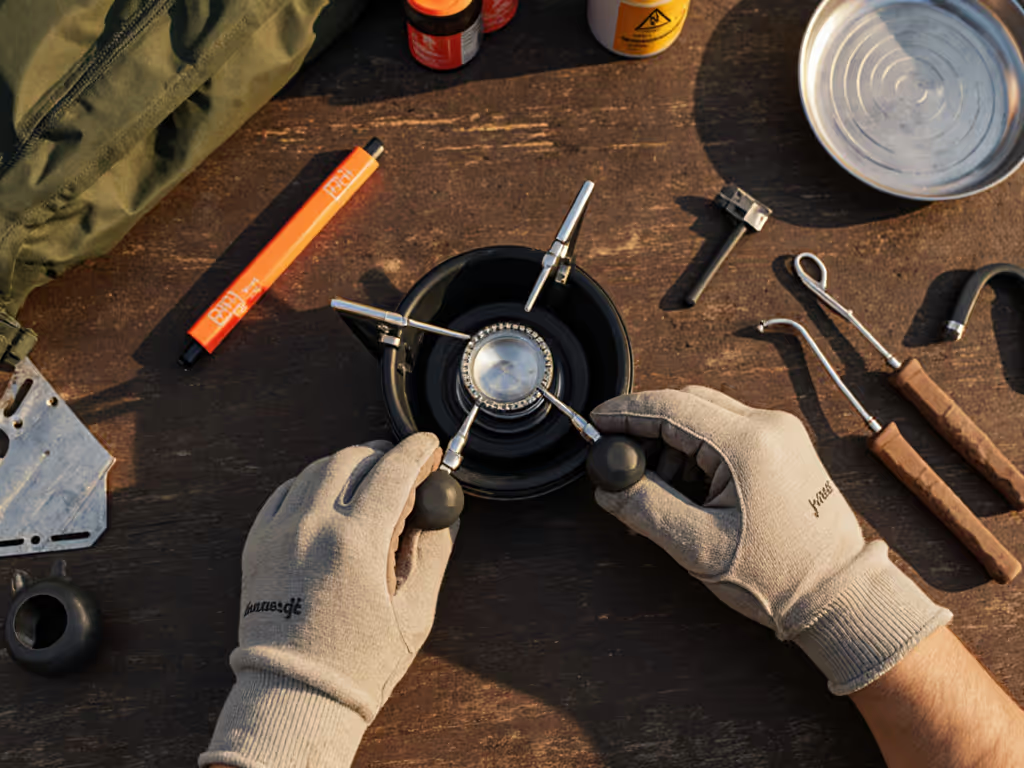
I've taught this checklist at community repair nights across the country, watching campers reclaim their independence through thoughtful modifications rather than expensive replacements. It's not about finding the lightest stove, it's about finding the most serviceable one that accommodates your unique physical needs.
Taking Action: Your Next Steps
Don't wait for your next trip to discover your stove isn't arthritis-friendly. Today, take these concrete actions:
- Test your current stove using the metrics in Step 1, often, simple modifications make standard stoves accessible
- Attend a community repair workshop (check REI or local outdoor clubs) where you can try different stove controls with guidance
- Build your arthritis-friendly toolkit: Include larger-grip screwdrivers, rubber jar openers repurposed for knobs, and silicone grease for smooth operation
- Join the conversation: The Backpacking Arthritis Support Group on Facebook shares field-tested modifications weekly
The most reliable arthritis-friendly stove isn't necessarily the newest model, it's the one whose components you understand well enough to modify and maintain. Fix it, fuel it smart, pack out less (every trip). When you choose serviceable stoves with standardized parts, you're not just accommodating current limitations; you're ensuring decades more adventures with minimal waste and maximum self-reliance. Your next great meal outside shouldn't depend on perfect hands, just the right setup.
Related Articles