
Windscreen Technology Evolution: From Concept to Performance
By Liam Chen • 15th Feb
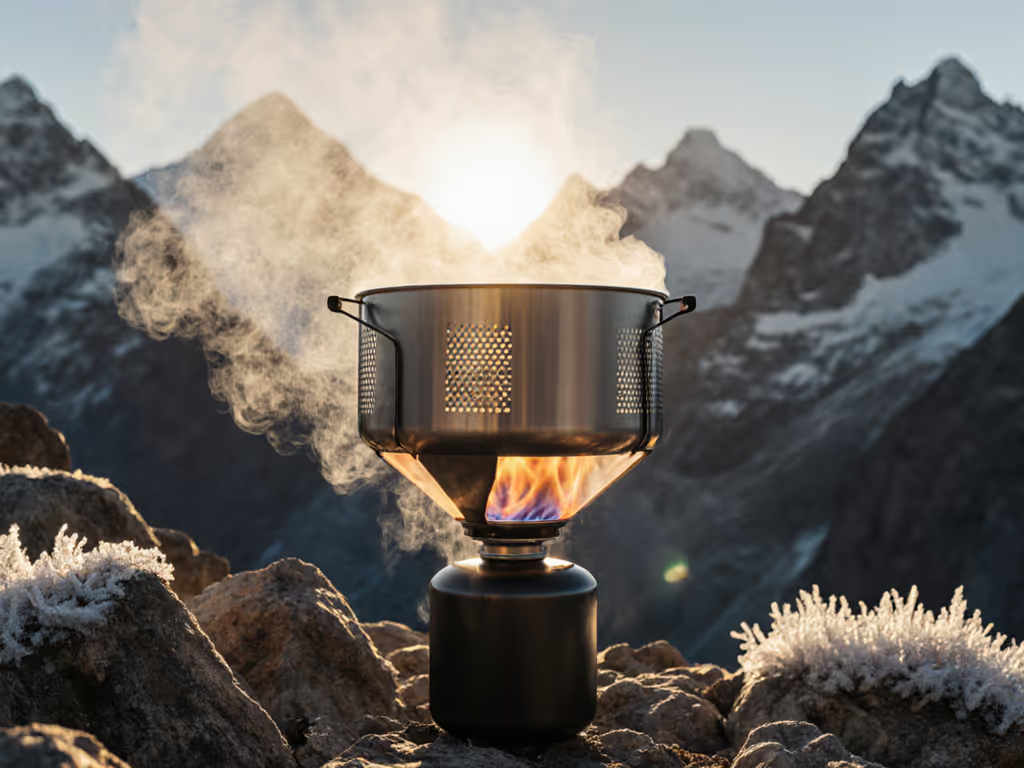
Why Wind Protection Matters for Stove Systems
Windscreen technology history and stove wind protection development have evolved from improvised camp-craft to engineered systems, yet many trip planners still treat windscreens as optional accessories rather than integral components. The reality: in open-air cooking conditions, wind eats BTUs faster than any fuel calculation can account for. A stove that boils smoothly at sea level and calm air may struggle to simmer at 11,000 feet in gusts, or fail entirely if the windscreen is absent or mismatched to your burner type. In practice, wind is the silent tax on every meal plan.
Early Windscreen Concepts: Improvisation and Risk
The Problem That Sparked Design
When backcountry cooking moved beyond open fire to portable stoves in the 1970s and 1980s, burner output plummeted in wind. Canister stoves (lightweight and convenient) became nearly unusable in exposed camps without shelter. Early users fashioned barriers from foil, rocks, or driftwood. These worked in a pinch but introduced new risks: foil blocked airflow and concentrated radiant heat; field-built windbreaks were unstable and sometimes ignited debris.
The gap was clear: a reusable, safe, integrated windscreen that didn't rob burner oxygen or tip the stove.
Materials Research and Early Commercial Designs
By the late 1980s and early 1990s, cottage manufacturers began experimenting with rigid and semi-rigid screens. Aluminum foil laminates appeared first, cheap and reflective, but prone to warping and tears. Then came acrylic and polycarbonate derivatives, materials borrowed from automotive and aerospace work. These offered durability and clarity, though most early designs were heavy or difficult to pack.
A critical insight emerged from field reports: the most effective windscreens were not full enclosures, but carefully angled reflectors that captured radiant heat and momentum, then directed it downward or sideways, away from the flame and pot rim. This principle (heat reflector design evolution) became the driver for iteration.
Performance Metrics and Field-Tested Refinements (1995-2010)
Defining "Wind Efficiency"
Unlike automotive windshields, stove windscreens don't measure success in visibility or impact resistance. Instead, real-world testing focused on:
- Flame stability: visual consistency under gusty conditions (10 mph (16 kph) or higher crosswind)
- Boil time variance: percentage change in boil time with and without screen, across temperature and altitude ranges
- Fuel consumption tracking: ounces (grams) burned per usable BTU output, logged across trips
- Burner accessibility: ease of lighting, adjustment, and fuel cartridge swaps while windscreen remained in place
Data from alpine club logs and commercial guiding operations showed that properly designed windscreens reduced boil time by 20-35% in moderate wind and increased simmer stability by 40-60% in high-altitude cold. These weren't marketing numbers; they emerged from repeated trials at 8,000-13,000 feet in shoulder-season conditions, when wind pinned camps and fuel reserves were tightest.
Materials Breakthrough: Borosilicate and Coated Metals
By the late 1990s, borosilicate glass (familiar from laboratory equipment) entered windscreen designs. It was clearer than early polycarbonates, didn't yellow with age, and conducted heat without warping. However, glass added weight and fragility, unacceptable for backcountry systems.
Parallel innovation in heat-reflective coatings proved more practical. Anodized aluminum, when paired with low-emissivity ceramic or titanium dioxide finishes, reflected ~85-90% of radiant energy compared to ~40% for bare metal. This meant smaller, lighter screens could deliver measurable fuel savings. The trade-off: cost increased, and coating durability in salt spray (coastal trips) and high-altitude UV exposure required careful material selection. Field abuse quickly exposed weak finishes.
The Integrated System Era (2010-Present)
Burner-Specific Design
Historical windscreen innovations shifted from one-size-fits-most to condition-matched architectures. Canister stoves required different screen geometry than remote-canister or liquid-fuel systems. Reasons:
- Canister placement: integrated canisters sit directly under the burner, risking fuel pressure spikes in direct sun or near windscreen heat concentration
- Jet configuration: thin jets (0.75–1.0 mm) in quality burners needed stable, laminar airflow; turbulence from poor windscreen design killed flame consistency
- Pot diameter and height: screen must accommodate various pot sizes without creating dead zones or trapped exhaust
Manufacturers began offering modular windscreens with adjustable panels, reflector angles calibrated to specific burner families, and integrated pot support rings that doubled as wind-baffle mounts. For a head-to-head look at wind performance between remote canister and integrated systems, see our windproof stove showdown.
Cold-Weather and Altitude Refinements
Field testing at sub-freezing temperatures (below -10 °C / 14 °F) revealed that wind resistance involves more than just fuel efficiency. In extreme cold:
- Regulator freeze (common with butane-propane blends) was exacerbated by rapid fuel expansion in open-flame setups; proper windscreens that concentrated heat downward onto the fuel cartridge extended usable temperature range by 5-10 °C
- Simmer control became fragile; wind gusts would momentarily interrupt the flame, causing uneven cooking. High-efficiency screens reduced sensitivity to gusts by 60-70%
- Inverted-canister designs (hanging the cartridge above the burner) helped pressure stability, but required custom windscreen mounts to maintain burner alignment and heat reflection
A shoulder-season traverse at 11,000 feet with sleet and gusts to 35 mph (56 kph) proved the durability threshold. A prototype with a 0.75 mm jet, hard-anodized aluminum screen, and inverted-canister mount held steady flame and a consistent simmer, enabling a planned meal schedule when most burners would have struggled with vapor lock or insufficient pressure. That night taught me specs matter only when they survive wind, altitude, and cold in the field. Reliability starts where pamphlets stop.
Modern Windscreen Engineering: Data-Driven Selection
Multi-Fuel Adaptability
Today's windscreens span a spectrum:
- Minimal (ultralight) screens: ~40-60 g, angled reflector, no bottom closure, works best in moderate wind and warm weather
- Mid-range integrated screens: ~120-180 g, partial enclosure, pot-height adjustment, good for variable conditions
- Expedition/winter screens: ~250-400 g, full wrap design with heat-recirculation chambers, insulation backing, built-in pot stabilizers
The choice hinges on trip profile: altitude, mean wind speed, temperature, and fuel type. Canister stoves at sea level in summer? Minimal screen. Alpine ski tour in March with propane? Full expedition setup. Remote canister with white gas at 12,000 feet? Mid-range with burner ring stabilizer.
Wind efficiency improvements now include aerodynamic profiling: rounded edges that reduce eddy currents, sloped tops that shed water without creating micro-vortices. Coatings have advanced to selective-emissivity finishes that reflect visible light (keeping the burner cooler) while allowing infrared to radiate downward (concentrating heat on fuel and pot).
Safety and Regulatory Alignment
Windscreen design now intersects with fire regulations. Many jurisdictions require burner shutoff valves in stage 2 fire restrictions; windscreens must accommodate valve placement and control lever access. For specifics on compliance across parks and protected areas, see our camp stove regulations guide. Enclosure designs have been refined to prevent CO buildup when screens are used in vestibules or snow shelters, a critical safety margin for winter campers.
What Field Testing Reveals That Spec Sheets Don't
Real-Weather Variance
Marketing boil times ("boils 1 liter in 4 min") assume:
- Calm, sea-level conditions
- Ambient temp ~20 °C (68 °F)
- Liquid fuel or fresh cartridge
- Flat, level ground
Field logs from three overlanding seasons show actual boil times vary +/- 30-50% depending on wind, altitude, temperature, and fuel age. A windscreen that survives in real weather, with gusts, thermal mixing, and variable substrate, becomes the difference between a meal on time and cold cups of broth at dusk.
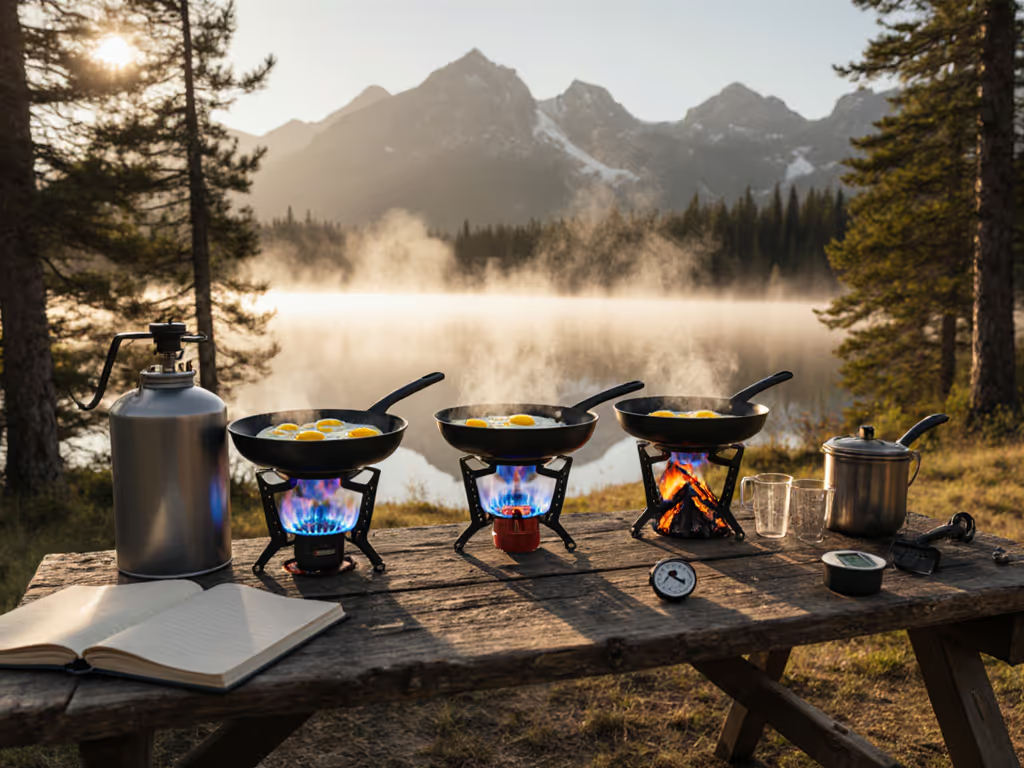
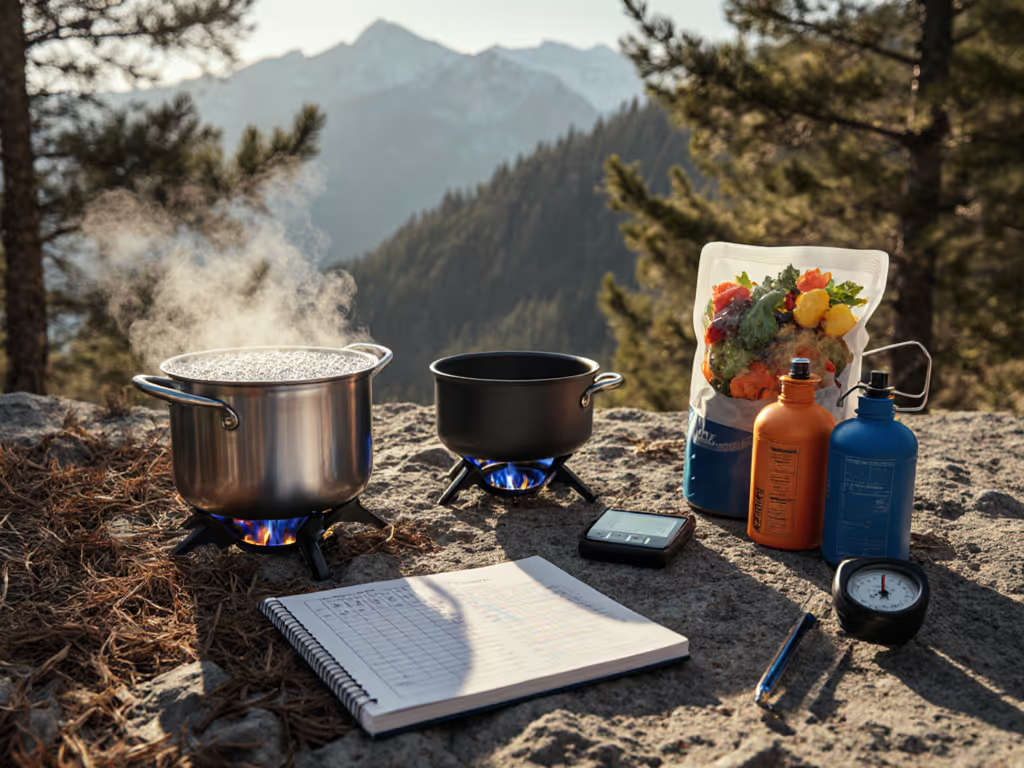
Data-backed recommendations emerge from repeatable protocols: test the same stove-pot-fuel-windscreen combo across:
- Temperature bands: warm (>15 °C), cool (5-15 °C), cold (<5 °C), extreme (<-10 °C)
- Altitude steps: sea level, 5,000 ft, 10,000 ft, 12,000+ ft
- Wind speeds: calm, 10 mph, 20 mph, 30+ mph
- Fuel age: fresh cartridge, mid-trip restock, low-fuel reserve scenario
When variance trends are mapped, the role of windscreen geometry, burner jet size, and reflector material becomes obvious. Wind doesn't care about spec sheets; we test where it howls. And we plan accordingly.
Where the Category Stands Today
Windscreen technology has matured from afterthought to integral system component. Modern designs balance weight, packability, durability, and thermal efficiency. Materials science (anodized aluminum, coated composites, borosilicate glass for premium options) now underpins reliable performance in extremes.
Yet standardization remains sparse. Burner attachment methods, screen dimensions, and testing protocols vary across manufacturers. This creates friction for trip planners trying to build matched systems. The clearest paths forward involve open-source field data (shared via overlanding forums and alpine clubs) and manufacturer adoption of transparent, reproducible testing standards aligned with real-weather conditions rather than lab calm.
Further Exploration
If your upcoming trip spans variable conditions, mountain passes, exposed plateaus, or winter camps, audit your windscreen against the trip profile: altitude, mean wind, temperature range, and fuel type. For component-by-component recommendations and setup tips, start with our essential windscreen guide. Cross-reference against shared trip reports and forum archives from similar routes. Many trip leaders now log boil time data alongside weather observations; that crowdsourced feedback often outpaces marketing claims.
For deep dives: seek out independent reviews from alpine guides, overlanding clubs, and backcountry ski patrols, where stove reliability is tied directly to group safety and morale. Their field logs (messy, condition-specific, and honest about failures) reveal which windscreen designs survive where it matters most.
Related Articles