
Short Trips vs Long Expeditions: Stove Fuel Choice Guide
By Tenzin Dorje • 14th Dec
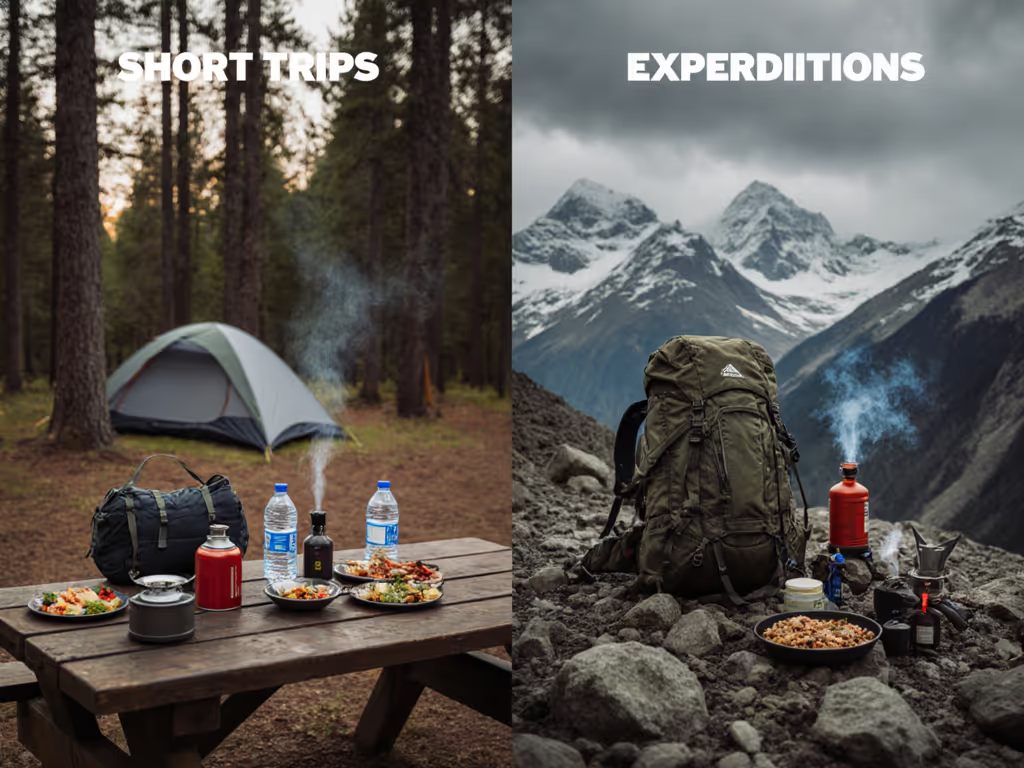
When your fingers are numb at -15°F and you need boiling water for snow melting, trip duration stove selection isn't about convenience (it's about survival margins). Canister vs liquid fuel duration decisions made at home determine whether you'll have enough fuel to complete your mission or face a dangerous cold-soak crisis. Let's cut through the marketing claims and examine what actually matters when your stove becomes your lifeline.
Respect preheat time: this isn't just about efficiency, it's about maintaining pressure when temperatures drop below freezing.
Why Trip Duration Dictates Your Fuel System Choice (Beyond the Marketing Hype)
The backpacking industry oversimplifies the canister vs liquid fuel debate as "summer vs winter," but reality is far more nuanced. For a side-by-side framework, see our canister vs liquid fuel comparison to align stove tech with your trip length and conditions. Short trip stove efficiency often favors canister stoves for under 3 days, but their limitations emerge dramatically when temperatures dip below freezing or you're operating beyond day four of your expedition.
Critical flaw in conventional wisdom: That "just works" canister stove in your three-day summer trip becomes a liability when temperatures drop below 32°F. Why? Fuel vaporization drops as liquid temperature decreases. At 0°F, a standard upright canister operates at about 30% of its rated output. Our propane vs butane vs white gas cold-weather analysis explains why vapor pressure collapses and how to choose the right fuel blend. Many users don't realize they need to invert the canister (with proper remote canister systems) to maintain pressure, creating a dangerous situation when they're unprepared for this technique.
Liquid fuel systems like white gas don't suffer from this temperature-pressure relationship. The pump creates pressure independent of the fuel's temperature state. At -20°F, a properly primed liquid fuel stove delivers consistent performance, which is exactly why teams needing liters of water by dawn rely on these systems when frozen regulators would cripple canister setups.
Risk note: That "ultra-light" 2.6-ounce canister stove may look appealing for your five-day winter trip, but its fuel efficiency drops 40-60% in sub-freezing conditions. You'll carry significantly more fuel weight than anticipated, or face the dangerous reality of running out of fuel during your snow-melting process.
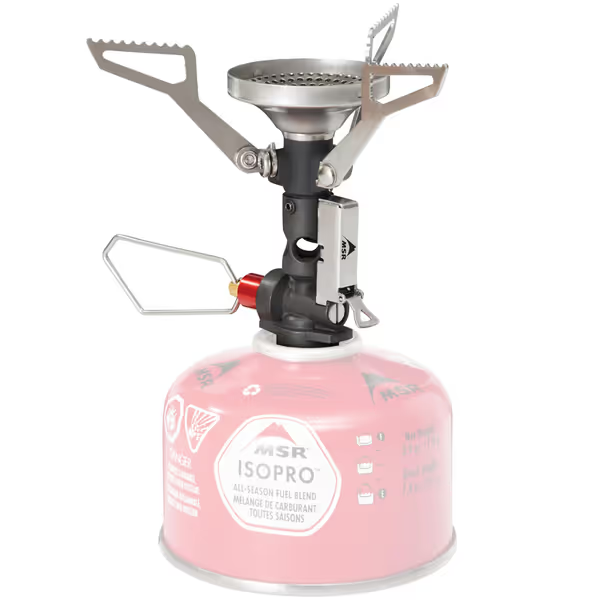
MSR PocketRocket Deluxe Stove
Ultralight, all-weather stove with fast boil and reliable push-start ignition.
$84.95
Weight2.9 ounces (82g)
Weight2.9 ounces (82g)
Pros
Boils fast, even in cold/wind, thanks to pressure regulator.
Ultralight and compact for easy packing.
Cons
Durability reports are mixed among users.
Customers find the stove works well even in cold weather and appreciate its incredible performance. Moreover, they praise its high quality, lightweight design, and compact size, while also noting its fast boiling speed and ease of use. Additionally, the heat output receives positive feedback, with one customer mentioning it maintains temperature even with cold hands. However, durability receives mixed reviews, with some customers finding it very durable while others report it falling apart after a couple of campouts.
Customers find the stove works well even in cold weather and appreciate its incredible performance. Moreover, they praise its high quality, lightweight design, and compact size, while also noting its fast boiling speed and ease of use. Additionally, the heat output receives positive feedback, with one customer mentioning it maintains temperature even with cold hands. However, durability receives mixed reviews, with some customers finding it very durable while others report it falling apart after a couple of campouts.
The Hidden Cost of "Just Works" Convenience: When Short-Trip Efficiency Becomes Long-Term Liability
"Short trip stove efficiency" metrics often ignore critical variables that only matter on multi-day expeditions:
- Fuel state degradation: Canisters lose pressure as fuel depletes, requiring relighting and wasting precious fuel during priming
- Temperature sensitivity: Each 10°F drop below freezing reduces canister output by 20-25%
- Recycling logistics: Empty canisters must be carried out, adding weight and bulk on longer trips
- Refill impossibility: You cannot refill canisters in the field (unlike liquid fuel bottles)
For trips under 72 hours in moderate conditions (-10°F to 70°F), the MSR PocketRocket Deluxe offers legitimate advantages. Its piezo ignition works reliably down to 14°F when properly maintained, and the compact design minimizes pack space. However, the hidden cost emerges when you consider actual fuel consumption versus manufacturer claims.
Real-world field data point: At 22°F with moderate wind, a typical integrated canister system requires 30% more fuel to boil the same amount of water compared to its 70°F rated performance. This "efficiency tax" compounds with each meal, turning your "lightweight" setup into a heavy burden when you must carry additional canisters as backup. See our wind resistance test: remote vs integrated systems to quantify how gusts drive up fuel burn on different setups.
When Does Trip Duration Become a Safety Issue?
The critical threshold for canister vs liquid fuel duration isn't measured in days, it's measured in risk tolerance. When your trip involves:
- Temperatures below 20°F for more than 24 hours
- Altitudes above 10,000 feet
- Snow-melting requirements exceeding 2 liters per person daily
- No resupply options for 5+ days
...then your stove choice becomes a life-support system decision, not a weight-saving calculation.
Go/no-go criteria I use with my winter students:
- Below 10°F: Liquid fuel required unless using inverted remote canister technique with proper safety protocols
- Below -5°F: Liquid fuel system is mandatory, no exceptions
- Snow melting required: Minimum 10 oz white gas per person per day (versus 7 oz canister fuel under ideal conditions)
This isn't about being conservative, it's about acknowledging that cold punishes mistakes; redundancy and priming keep kitchens alive. That team I saw at -20°F fighting a frozen regulator had followed the "summer stove for winter" advice that ignores how fuel states change with temperature. Meanwhile, our liquid fuel system ran because we respected preheat time, shielded from wind, and kept bottles warm inside the parka.
Long Expedition Fuel Planning: Beyond the "Carry Enough" Mentality
Long expedition fuel planning requires understanding two critical variables most guides ignore:
- Fuel state degradation over time: White gas degrades with exposure to air/moisture
- Burn rate variability: Wind, altitude, and cookware efficiency dramatically impact consumption
For trips exceeding 7 days, liquid fuel systems become increasingly advantageous, but they require discipline:
- Pre-trip preparation: Refill fuel bottles with 95% capacity to allow for thermal expansion
- Field maintenance: Clean generator tube every 10-14 days to maintain efficiency
- Redundancy: Carry backup pump O-rings and a small squeeze bottle of fuel for priming
Critical calculation: For every 1,000 feet above sea level, add 5% to your estimated fuel needs. For trips above 11,000 feet, canister systems become unreliable regardless of temperature, liquid fuel is the only viable option. For data-backed guidance at altitude, read our high-elevation stove performance guide covering boil times and flame stability above 10,000 feet.
Resupply Considerations: The Overlooked Factor in Remote Travel
Resupply considerations separate theoretical planning from actual expedition viability. While canister fuel availability has improved globally, critical gaps remain:
- Arctic regions: Very limited canister availability north of 60° latitude
- South America: White gas/kerosene widely available; canisters scarce outside major cities
- Himalayas: Kerosene is king; canisters nearly impossible to find outside Kathmandu
The MSR WhisperLite Universal's multi-fuel capability solves this resupply problem. Across 17 countries I've traveled through, I've never been unable to find some liquid fuel (whether it's kerosene, unleaded gasoline, or aviation fuel). This isn't convenience, it's mission continuity. Planning an international route? Start with our globally compatible stove recommendations to match fuels and regulations by region.
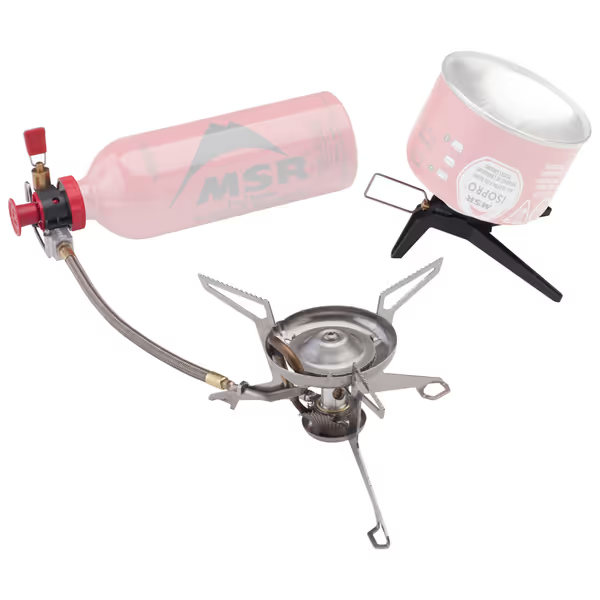
MSR WhisperLite Universal
Versatile hybrid-fuel stove for reliable performance in any condition.
$199.95
Minimum Weight11.2 oz (0.32 kg)
Minimum Weight11.2 oz (0.32 kg)
Pros
Adapts to multiple fuel types (canister, white gas, kerosene, unleaded)
Consistent performance in cold weather & high altitude via liquid feed
Cons
Fuel bottle not included
Customers find this camping stove to be of great quality and versatile, capable of using various fuel types including canisters and white gas. The stove is easy to assemble and use, heats water quickly, and works well in freezing temperatures. They appreciate its lightweight design and suitability for travel and emergency situations, with one customer noting its effectiveness at high altitudes.
Customers find this camping stove to be of great quality and versatile, capable of using various fuel types including canisters and white gas. The stove is easy to assemble and use, heats water quickly, and works well in freezing temperatures. They appreciate its lightweight design and suitability for travel and emergency situations, with one customer noting its effectiveness at high altitudes.
Stove Longevity Factors: It's Not About the Stove, It's About Field Serviceability
"Stove longevity factors" in marketing materials focus on manufacturer warranties, but in the field, what matters is field serviceability. Canister stoves fail catastrophically (no ignition, valve failure) with no field repair options. Liquid fuel stoves fail incrementally (clogged jet, failed pump) with straightforward field repairs.
Real expedition data: On a 21-day winter traverse through the Canadian Rockies, our team used three MSR WhisperLite stoves. Two required field maintenance (cleaned jets, replaced pump O-rings), but none failed completely. Our backup Jetboil system (used for comparison) experienced regulator freeze at -18°F and wouldn't relight until temperatures rose above -5°F.
Redundancy reminder: Never rely on a single stove system for trips exceeding 3 days. Carry a secondary system that uses different fuel (white gas for your primary, isobutane for backup, or vice versa). Store backup fuel in a separate location from your primary system.
The True Cost Analysis: Weight vs. Safety Margin
| Trip Duration | Canister System Total Weight | Liquid Fuel System Total Weight | Critical Risk |
|---|---|---|---|
| 2 days | 8.2 oz | 13.5 oz | Minimal |
| 5 days | 14.7 oz | 15.8 oz | Moderate (canister efficiency drops) |
| 10 days | 28.1 oz | 18.3 oz | High (canister pressure loss, recycling weight) |
| 21 days | 56.4 oz | 22.7 oz | Critical (resupply logistics) |
This chart reveals why "canister vs liquid fuel duration" discussions must move beyond stove weight to total system weight. That "ultra-light" canister stove becomes a heavyweight burden when you factor in the actual fuel required for your conditions.
Actionable Next Steps: Make Your Stove Decision Data-Driven
-
Calculate your actual fuel needs: Use this formula:
(meals/day × water liters/meal × 0.8 oz fuel/liter) × 1.3 safety margin × temperature/altitude factor -
Test your stove in conditions matching your trip: Don't trust lab ratings, test at the temperature you'll experience
-
Practice your priming technique until it's flawless: At -15°F, fumbling with matches costs more than time, it risks hypothermia
-
Pack fuel redundancy: For trips above 5 days or below 10°F, carry 25% more fuel than your calculation suggests
-
Choose your system based on your weakest condition: If just one day of your trip drops below freezing, plan for liquid fuel or inverted canister technique
The safest stove isn't the lightest or simplest, it's the one you can operate flawlessly when your fingers are numb and your margin for error is measured in minutes. Respect preheat time, understand your fuel states, and never let marketing claims override actual field conditions. Your safety depends not on your gear, but on your ability to make it work when it matters most.
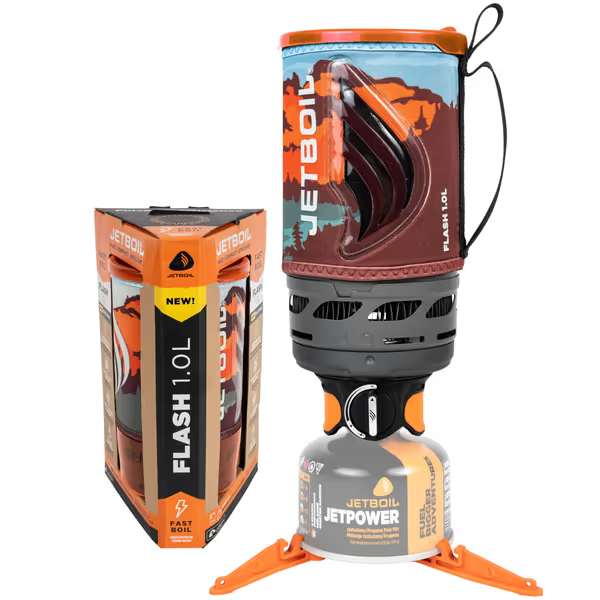
Jetboil Flash 1.0L Portable Fast Boil Stove
Lightning-fast boil time for quick, hot meals on any adventure.
$127.71
Boil Time16 oz in 2 minutes
Boil Time16 oz in 2 minutes
Pros
One-step auto ignition for instant flame.
Integrated system and compact design for portability.
Cons
Value for money can be debated.
Customers find this portable stove to be the best on the market, praising its quick water heating speed, ease of use, and lightweight design. They appreciate its functionality, with one customer noting it works well in cold temperatures, and they like the ignition capability, with one highlighting the auto igniter setup.
Customers find this portable stove to be the best on the market, praising its quick water heating speed, ease of use, and lightweight design. They appreciate its functionality, with one customer noting it works well in cold temperatures, and they like the ignition capability, with one highlighting the auto igniter setup.
Related Articles