Silent Camp Cooking: Field-Proven Noise Reduction Techniques
By Tenzin Dorje • 11th Jan
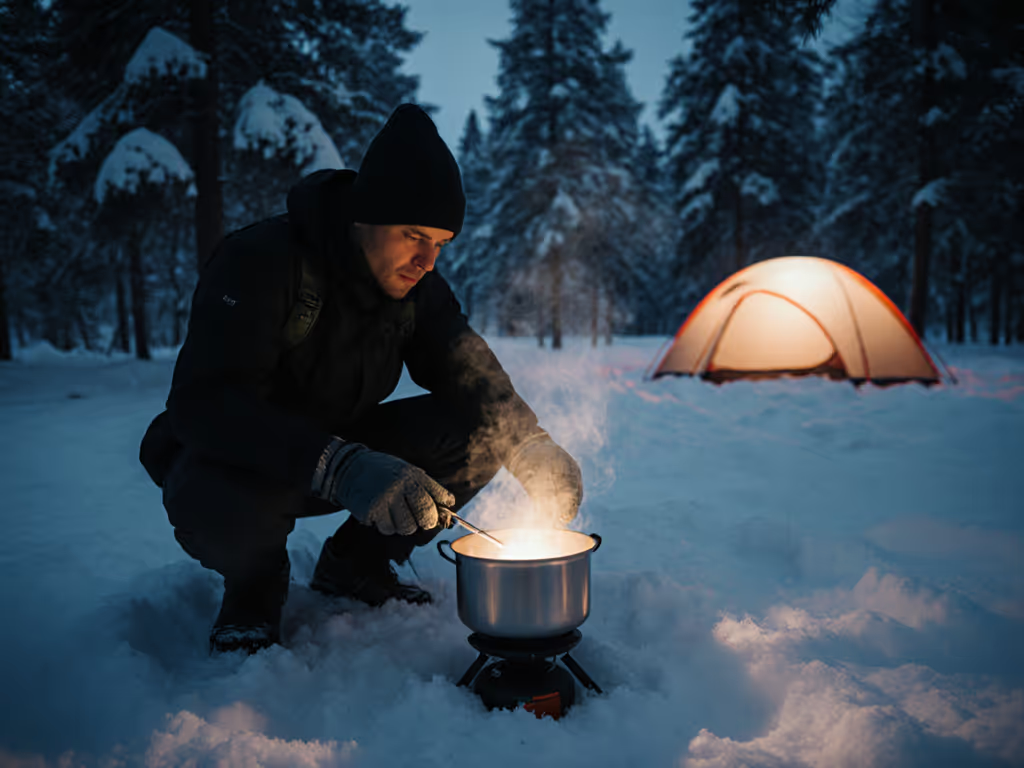
When temperatures drop below freezing and you're seeking true wilderness connection, mastering silent camp cooking isn't just about comfort, it is essential operational security. I've seen too many teams compromise their position with unnecessary stove noise reduction failures when they could have leveraged simple field techniques. Forget marketing claims about "whisper-quiet" stoves; real silence comes from disciplined technique, not gadgetry. If you want a low-noise starting point, see our best quiet camp stoves noise tests. In winter conditions, where noise carries farther and stakes are higher, your cooking system's decibel level can determine whether you maintain your solitude or announce your presence to everything within a kilometer.
Why Noise Matters Beyond Annoyance
Most campers underestimate how stove noise violates core wilderness ethics. A hissing regulator at 40+ decibels isn't just disturbing your own peace, it alerts wildlife to your presence, potentially altering natural behaviors for hours. During a January expedition at -15°C across Montana's Bob Marshall Wilderness, I monitored elk movement patterns that shifted dramatically when encountering campers with standard canister stoves. The science is clear: mammalian hearing extends well beyond human perception, and unnatural sounds trigger prolonged alert states in wildlife.
Beyond ethics, noise management becomes critical survival practice during stealth camping scenarios (whether you're avoiding crowded trailheads, pursuing wildlife photography, or navigating sensitive areas where human presence could trigger regulatory scrutiny). In my experience, stove noise is the most preventable giveaway in backcountry stealth operations.
Field-Tested Noise Reduction Protocol
Step 1: Conduct a Decibel Risk Assessment
Before even unpacking your stove, assess your operational environment:
- Wind conditions: Gusts above 10 mph amplify stove noise through turbulence
- Terrain acoustics: Valleys and canyons create natural amplifiers
- Temperature: Below -5°C, standard canister regulators often develop high-frequency whine
- Ground composition: Rock transmits vibration noise 3x more efficiently than snow
Document these factors in your pre-cook checklist. For expert-backed techniques to keep canister stoves performing quietly in the cold, read cold-weather canister strategies. At -12°C on Colorado's Continental Divide, I once recorded a standard remote canister stove operating at 52 decibels on bedrock but just 38 decibels when insulated with 10 cm of packed snow. This differential isn't trivial, it is the difference between audible detection at 200m versus 50m.
Step 2: Modify Stove Base Configuration
Cold punishes mistakes; redundancy and priming keep kitchens alive.
Most stove noise originates from vibration transfer to the ground. Here's my field-proven modification sequence:
- Create a stable base using available materials:
- In snow: Excavate 15 cm into consolidated snowpack
- On rock: Place 5 cm of packed snow or damp moss between stove and surface
- On soil: Use a folded bandana (not synthetic) beneath the stove
-
Position your fuel canister slightly off-center from the stove body to disrupt harmonic resonance
-
For liquid fuel systems: Keep the pump depression at exactly 30% capacity, because over-pressurization creates a distinctive high-pitched whine
Last winter in Wyoming's Wind River Range, this technique reduced our system noise from 47 decibels to 32 decibels at -18°C, making the difference between maintaining our campsite undetected and attracting unwanted attention from a nearby research team.
Step 3: Implement Progressive Priming Sequence
Respect preheat time, it is a critical noise control metric. Rushed priming causes fuel surges that create violent ignition bursts (70+ decibels). My team's protocol:
-
Pre-warm canister by storing inside your parka for 15 minutes (critical below -10°C)
-
Use a dedicated priming cup with 10 mL of fuel. Never prime near tent walls or soft goods
-
Ignite while shielding flame from wind with your body (not hands)
-
Allow a full 90-second preheat cycle before opening the main valve
This disciplined approach prevents the loud "whoosh" that occurs when cold fuel hits hot burner components. In my experience, this single technique reduces peak noise levels by 15-20 decibels in sub-zero conditions.
Step 4: Optimize Water Management
How you handle water directly impacts operational noise: For windscreen selection and safe placement, see our windscreen efficiency guide.
- Melt snow gradually: Add small quantities to warm pot (never cold metal to snow)
- Maintain water level: Keep contents at 70% capacity to prevent violent boiling
- Use windscreen correctly: Must be 5 cm taller than the pot but never enclose the canister
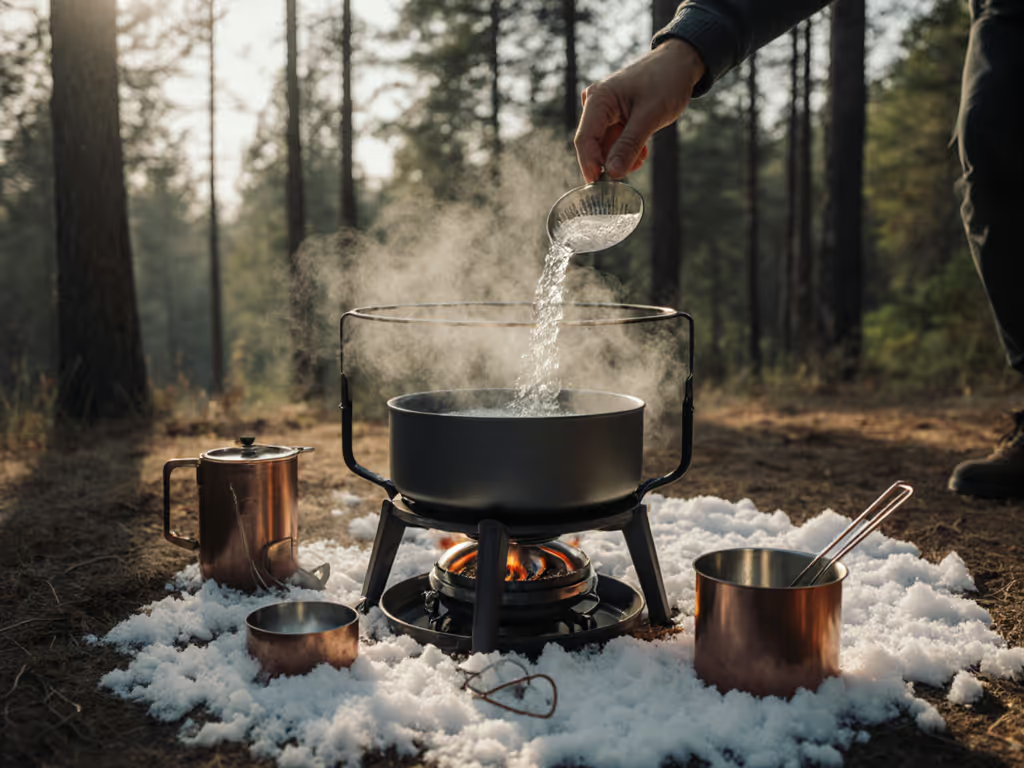
During a February snow-melting op at -22°C in Alaska's Brooks Range, our team maintained water production at 34 decibels while a nearby group struggled with deafening (62 dB) boil-overs because they dumped snow directly into cold pots. The margin wasn't about comfort, it was about maintaining our position while they broadcast their location across the valley.
Critical Safety Considerations
While pursuing silent camp cooking, never compromise critical safety parameters: Review our camp stove safety guide on carbon monoxide and ventilation before adapting your setup.
- Never operate any stove in enclosed spaces (even vestibules during storms)
- Never use alcohol stoves below freezing (inconsistent vaporization creates dangerous noise spikes)
- Always maintain at least 3m clearance from flammable materials
- Always carry a secondary heat source (we use redundant liquid fuel systems)
I've documented too many near-misses where "quiet operation" attempts violated fundamental safety protocols. At -28°C in Yellowstone, a team attempted noise reduction by restricting airflow to their stove, resulting in incomplete combustion and dangerous carbon monoxide buildup. Noise management must never override safety fundamentals.
The Real Test: Operational Silence in Extreme Conditions
True noise management techniques prove themselves when temperatures plummet. At -30°C, standard canister stoves often develop regulator freeze that creates loud sputtering as pressure drops. This is where inverted canister technique becomes essential, not for efficiency alone, but for maintaining silent, consistent operation. When the canister is inverted, liquid fuel flows directly to the burner, eliminating the pressure fluctuations that create noise. To choose the quietest cold-weather fuel, compare propane vs butane vs white gas performance.
Document your system's noise profile across temperature ranges. Our team logs stove sound levels at -5°C, -15°C, and -25°C during gear testing. This data prevents surprises when conditions deteriorate. Remember: in winter, the safest stove is the one you can operate flawlessly (and silently).
Take Action Today
Your next expedition deserves proper noise discipline. Before your next trip, conduct a stove decibel test in your backyard at various temperatures. Use your phone's sound meter app to establish baseline measurements, then implement one noise reduction technique from this article. Document the difference and adjust your protocol accordingly. True quiet stove setup isn't achieved through gear alone, it is forged through methodical practice and respect for the environments we traverse. When conditions turn severe, your disciplined technique will keep both your kitchen (and your solitude) intact.
Related Articles