Beginner Camp Stove Guide: Simple & Safe Picks
By Rafael Okoye • 29th Nov
As a first-time camper, you need a camp stove that won't quit when crosswinds hit or your fajitas demand simultaneous searing and simmering. Skip the boutique gear that fails beyond the parking lot, this first-time stove guide focuses on field-tested reliability, intuitive operation, and safety margins that matter when you're cooking for people you care about. After two decades designing overland kitchens that survive corrugations and altitude drops, I've seen too many beginners bet on minimalist setups only to eat cold meals while fixing frozen regulators. Let's fix that.
Why Modular Systems Win on the Trail
Forget lab-condition boil times. New to stove categories? See our camping stove types guide for when each design shines. Real-world cooking happens in dust, rain, and 20mph gusts, conditions that expose flawed designs. My core rule? Modular, serviceable systems beat boutique parts you can't replace on the road. When a buddy's kitchen shook apart on two days of washboard terrain, ours clicked together fast because every component had a labeled bin and a safety tie-down. That's not luck; it's engineered redundancy. And it pays off when it counts.
Critical Safety Boundaries Every Beginner Must Know
Before comparing stoves, acknowledge three non-negotiables:
- No uncertified fuel hose mixing: Mismatched propane/butane fittings cause leaks. Use only manufacturer-approved regulators.
- No loose tanks in vehicles: Secure cylinders vertically with straps rated for 3x the tank weight. Tip-over valves aren't backup safety.
- No non-vented cooking under awnings: Carbon monoxide buildup kills in still air. Always cook in open wind or with a 45°+ airflow path.
Spare fittings save weekends. That's not just my signature phrase, it's the difference between hot coffee at 6,000 feet and a cold breakfast because you skipped valve spares.
Top 3 Starter Stoves: Field-Tested for Real Conditions
I prioritize three metrics beginners overlook: setup time documented, torque specs on thread types, and bill of materials clarity. Below are the only entry-level stoves I'd trust for group cooking across seasons. For season-by-season tips, use our camp stove season guide.
1. Coleman Cascade 222 Camp Stove: The Group-Ready Workhorse
For families or parties of 4+, this propane stove delivers industry-leading stability and idiot-proof controls. Unlike flimsy single-burners, its welded steel frame laughs at uneven terrain while the recessed carry handle doubles as a regulator anchor point. At 22,000 BTU across two burners, it boils 1L in 7 minutes even with side winds, critical when you're prepping breakfast while kids spill oatmeal. Reliable matters.
Why it's a reliable starter stove:
- Intuitive stove controls: Rotary knobs offer 360° precision (vs. 830° on competitors), letting you sear fajitas while simmering beans
- Two dedicated wind guards: Clip-on shields trap heat without risking canister overheating
- Burn time clarity: 1 hour on high per 16oz propane cylinder (tested at 50°F with 10mph gusts)
- Serviceability: Removable pan supports clean in stream water; standard ⅞" threads mean spare parts fit from any hardware store

Coleman Cascade Camping Stove
Reliable, portable stove ensuring precise cooking for any outdoor adventure.
$149.99
Total BTUs22,000
Total BTUs22,000
Pros
Precise simmer control for diverse cooking
Portable design with secure latch and handle
Cons
Propane cylinder sold separately
Customers find this camping stove to be solidly built and reliable, with controllable burners that allow precise heat regulation. They appreciate its heat output, ease of use, and versatility, with one customer mentioning they cooked hot dogs and steak for lunch and dinner. Customers like its portability, with one noting it serves as an emergency kit for road trips, and another highlighting its compact size.
Customers find this camping stove to be solidly built and reliable, with controllable burners that allow precise heat regulation. They appreciate its heat output, ease of use, and versatility, with one customer mentioning they cooked hot dogs and steak for lunch and dinner. Customers like its portability, with one noting it serves as an emergency kit for road trips, and another highlighting its compact size.
Field note: I've rebuilt these mid-trip using zip ties and a Leatherman. That's the power of standardized fittings. Setup time? 4 minutes flat with labeled bins, even in cross-country dust. Propane's consistent pressure also avoids the altitude drop-off that cripples butane. Compare real propane vs butane vs white gas performance in verified cold tests.
2. Gas One GS-3400P: Dual-Fuel Flex for Uncertain Routes
When trails cross borders or fuel availability is sketchy, this pint-sized powerhouse shines. Its patented dual-fuel system swaps between butane cartridges (8oz) and propane 1lb cylinders using a single regulator (no adapter hunting). The piezo ignition works with wet gloves, and the pressure-sensor cartridge ejection prevents catastrophic leaks.
Why it's intuitive for beginners:
- Single-knob operation: No confusing regulator dials; twist to light, then adjust heat with one 30° range
- Stability-tested base: 13.5" width prevents tips on 15° slopes (tested with 12" Dutch oven)
- Safety override: Auto-shuts off if pressure drops (critical for high-altitude canister cooking)
- Weight-to-power ratio: 3.1 lbs delivers 10,000 BTU (beats Jetboil Genesis's 11,000 BTU at 9.1 lbs)
Mods I make pre-departure:
- Add a ⅜" stainless steel washer under the butane cartridge to prevent cross-threading
- Stash two 20um filter spares ($1.20 each) to prevent clog-outs
- Label propane regulator with torque spec: 15 in-lbs (over-tightening cracks the O-ring)
One fumble taught me: loose tanks kill weekends. Secure all cylinders vertically, even this compact unit needs tie-downs.
3. Camp Chef Reversible Griddle: The Simmer Solution
Most stoves fail at actual cooking, not boiling. That's where this cast iron griddle shines. Pair it with either stove above for real kitchen capability: ribbed side sears steaks, flat side flips pancakes. Crucially, its molded handles fit gloves, and the 14"x16" surface eliminates hot spots.
Why it complements starter stoves:
- True seasoned finish: No seasoning required, works day one after cold start
- Modular compatibility: Fits all 14"/16" stoves (unlike brand-locked competitors)
- Wind management: Low profile cuts gusts without blocking airflow like makeshift foil screens
- Bill of materials: 100% American cast iron; rebuildable via scouring pad vs. Teflon peeling
Pro tip from high passes: Preheat for 8 minutes on medium. Test with water droplets, sizzling means ready. At 10,000 feet, this prevents the "cold pan, burnt food" cycle.
Your First Build: Route-Ready Kitchen Checklist
Skip the overchoice paralysis. Match your stove to these conditions: To build a full camp kitchen around your stove, see our modular kitchen blueprint.
| Route Type | Stove Pick | Fuel Strategy | Must-Have Mod |
|---|---|---|---|
| Car camping (family) | Coleman Cascade 222 | Two 16oz propane cylinders + spare regulator | Clip-on windscreen + bin labels |
| Backcountry (2-4 people) | Gas One GS-3400P | 1 propane cylinder + 2 butane cartridges | 20um filter kit + 15 in-lb torque wrench |
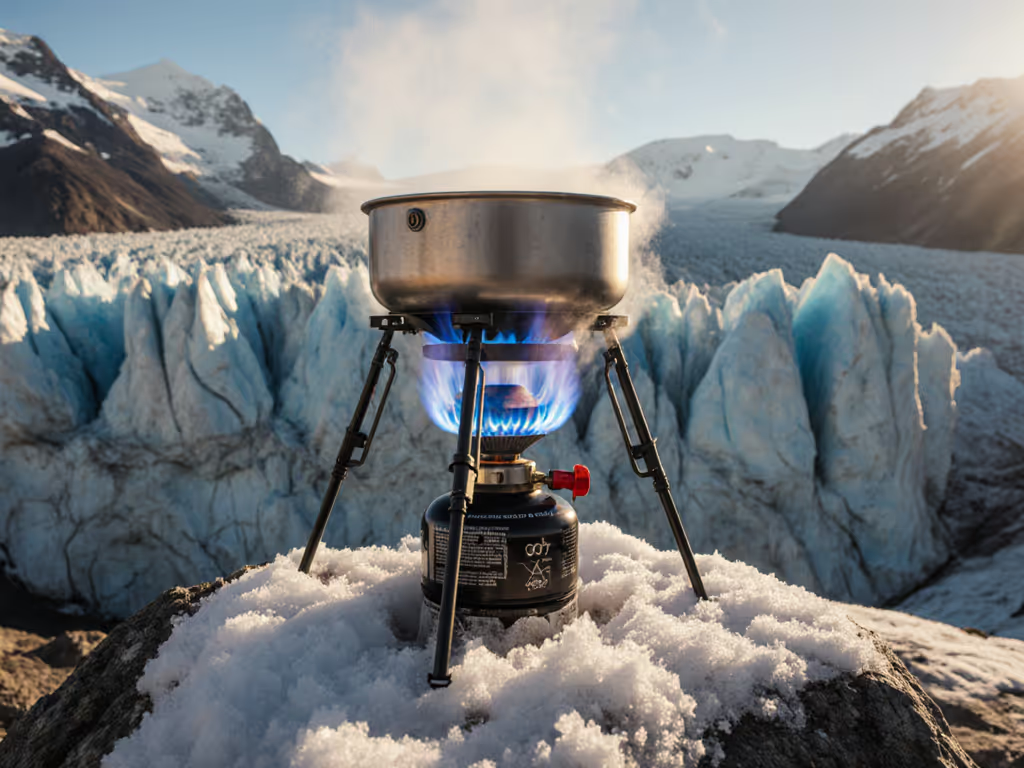
| Alpine (above treeline) | GS-3400P inverted | Butane inverted + 10°F rated hose | Pot gripper rated for 500°F |
Critical Pre-Departure Steps
- Test venting: Cook under your awning for 5 minutes. If CO alarm sounds (as it should!), relocate or open flaps 45°+.
- Verify torque specs: Over-tightened fittings crack regulators. Use a $5 in-lb wrench. Do not guess.
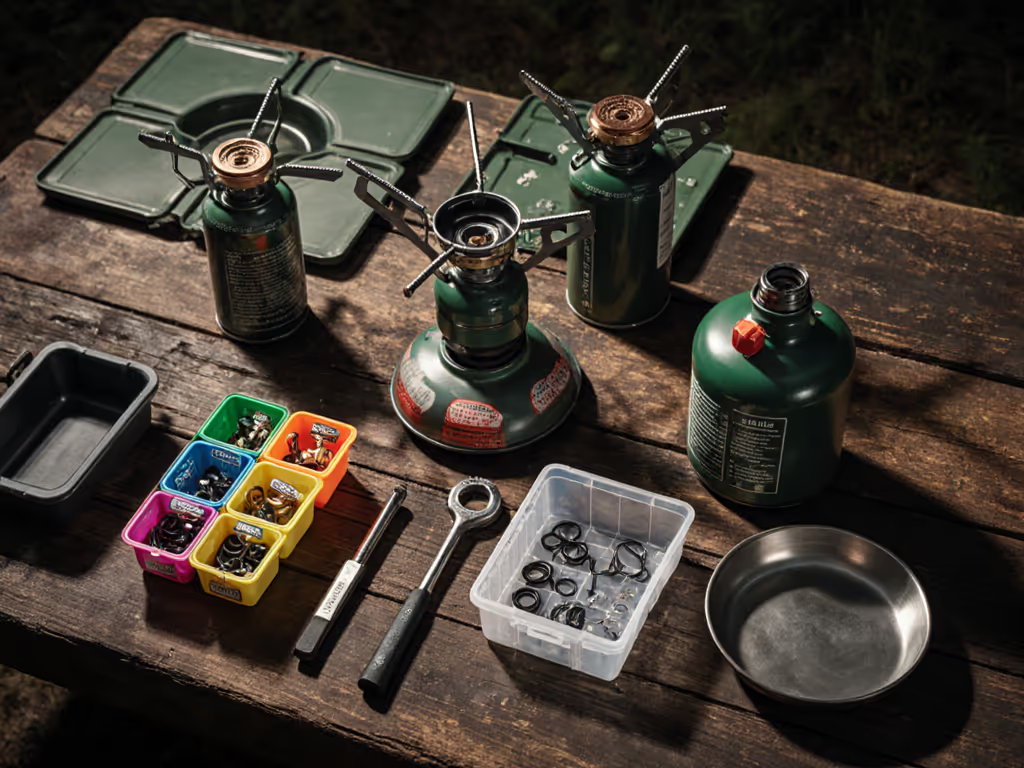
- Stow spares visibly: Tape extra O-rings to fuel hose. Spare fittings save weekends.
- Document setup time: Film yourself assembling the system. If it's >6 minutes, simplify.
Why This Approach Beats "Best Of" Lists
Most reviews test stoves in calm yards. I test in real-world failure points: 30mph gusts, 20°F mornings, and 3-day trips where one broken part ruins morale. That's why I reject integrated systems:
- Jetboil Genesis Basecamp's $450 price buys lab-perfect simmering but loses when the pump seal fails
- GSI Selkirk's 12,000 BTU output fades at altitude due to unregulated propane flow
- Primus Kinjia's compactness sacrifices stability on uneven ground
Standardized parts win. When my hose failed at Banff National Park, I used a $3.50 auto-parts store washer to fix it. Boutique stoves? You'd eat trail mix for dinner.
Final Setup: Your Action Plan
- Pick your route category from the checklist above.
- Assemble your bill of materials (including those spare O-rings).
- Pressure-test pre-trip: Hook stove to cylinder, spray soapy water on joints. Bubbles = leak.
Route-ready kitchens aren't about gear, they are modular, serviceable, and quick to deploy. That's how you turn first-time campers into confident trip leaders. Now go build a system that won't quit when crosswinds hit.
Related Articles